Sizing an Inverter for Work Truck Tool and Equipment Loads
The Short Answer: Equipping a commercial work vehicle, tractor trailer, or service van with a reliable power inverter designed around truck applications allows mobile crews to run heavy-duty power tools, diagnostic computing equipment, and auxiliary devices directly from the mobile workspace. Traditional service setups relied on loud, gas-burning generators that required constant manual handling and fuel tracking. Integrating a heavy-duty inverter or power converter alongside the vehicle’s battery and an auxiliary battery bank provides clean, reliable power without requiring an engine to idle wastefully at every job site.
Operating out of a modern commercial vehicle or semi truck requires a dependable power source to maintain workflow uptime. From long-haul sleeper cabs to passenger-seat mobile workstations, properly sizing your electrical setup is the only way to prevent system faults and protect sensitive hardware.
Understanding Work Truck Power Demands and Continuous Loads
When designing a mobile electrical system for a work vehicle, evaluating total electrical consumption is the most critical step. Different tools and commercial devices impose unique demands on the underlying electrical device network.
Mapping the System Architecture
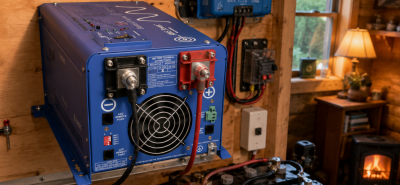
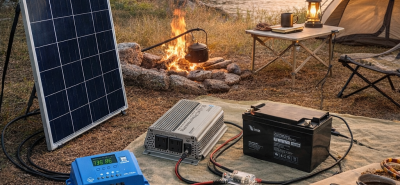
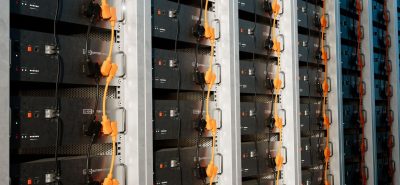
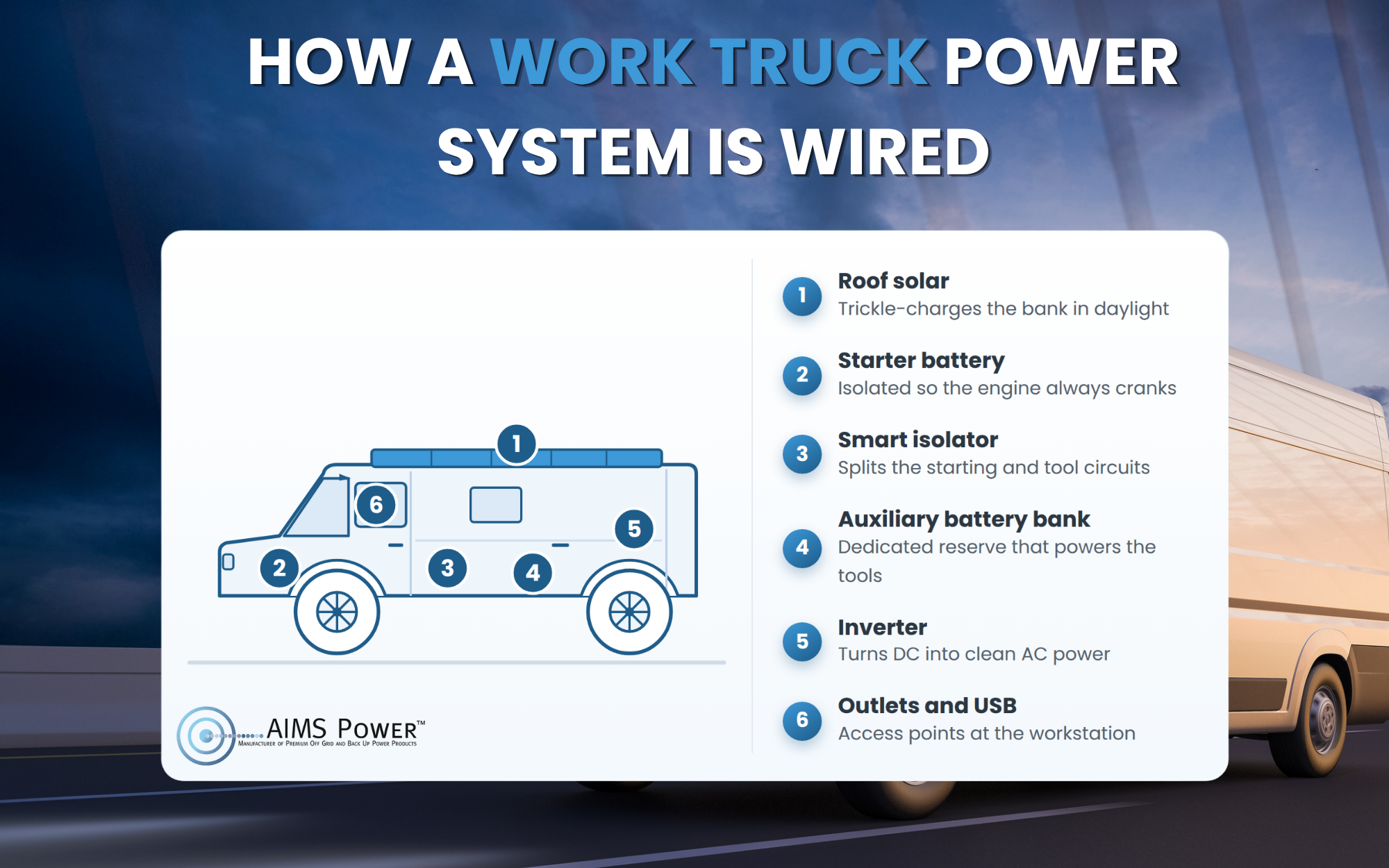
To safely support these demands without draining the engine, a work truck power system relies on a specific wiring architecture. A smart isolator splits the tool circuit from the main starting circuit, keeping the starter battery isolated so the engine always cranks. Instead, tools run off a dedicated auxiliary battery bank that can be charged by roof solar in daylight. The inverter pulls from this reserve bank, converting DC into clean AC power routed to outlets and USB access points at the mobile workstation.
Continuous Running Requirements
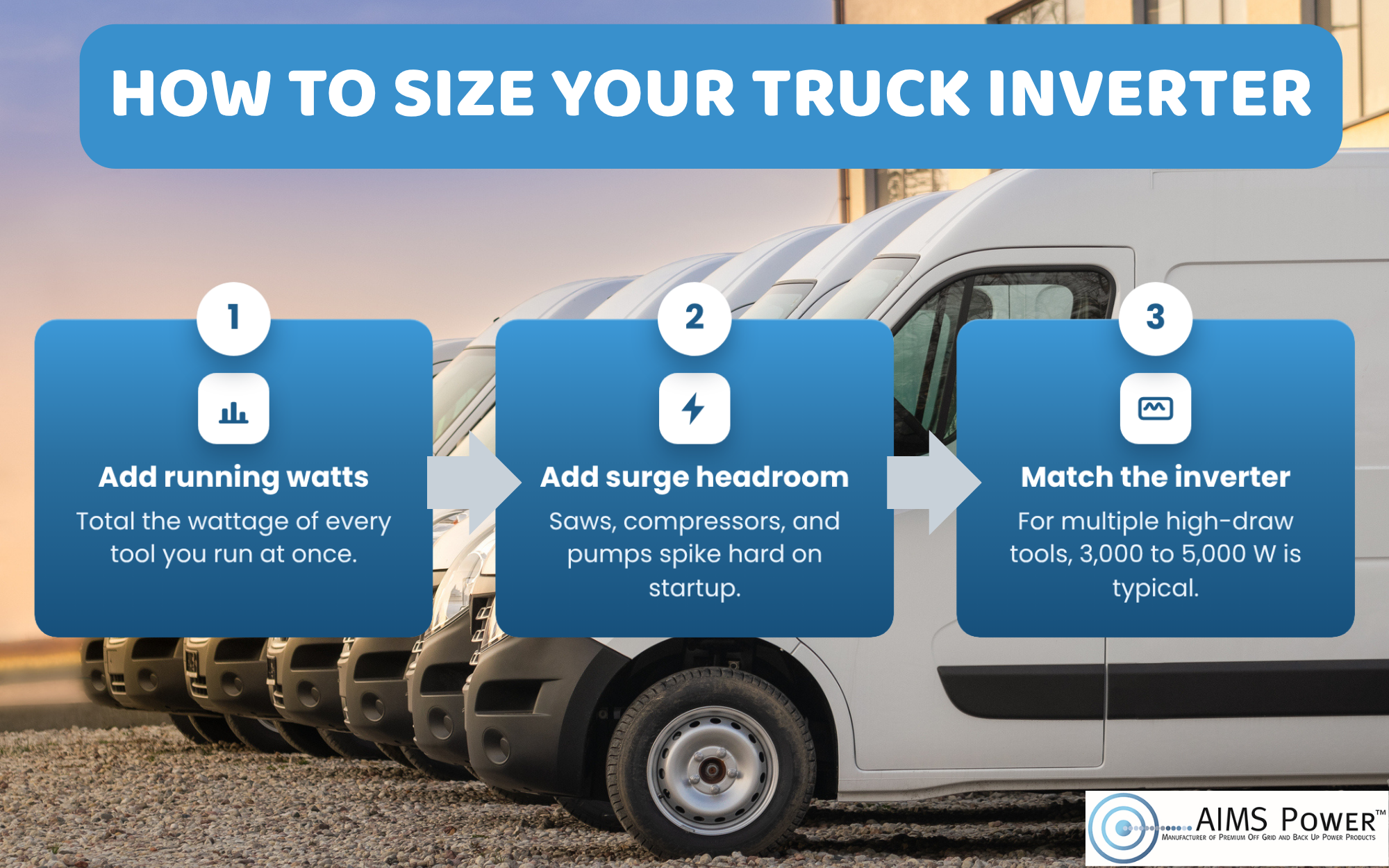
Every tool or appliance draws a specific amount of steady wattage while operating. A properly sized power inverter must be rated to handle the cumulative continuous wattage of all equipment running simultaneously.
Startup Surges
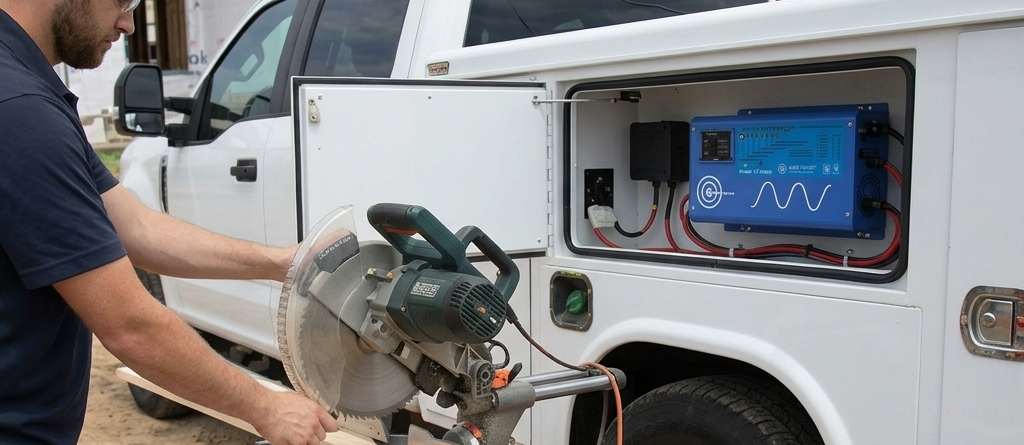
Motor-driven tools, such as air compressors, heavy saws, and pumps, require an instantaneous burst of electrical current when first triggered. Selecting the right inverter ensures it features enough surge headroom to handle these spikes without tripping internal protection modes.
Failing to match the inverter capacity to the actual tool load leads to frequent thermal shutdowns and potential equipment damage. To eliminate guesswork, plug your equipment list into our inverter sizing calculator to automatically verify your continuous baseloads and peak surge requirements before installation.
Choosing Between Pure Sine Wave and Modified Sine Wave Inverters
The quality of the AC waveform delivered to your tools and electronics dictates how safely equipment will operate over the long term.
Pure Sine Wave Inverters
A pure sine wave inverter produces smooth, clean electricity that mirrors standard utility grid power. This output is mandatory when powering sensitive electronics, precision testing equipment, communications gear, and medical hardware like a cpap machine.
Modified Sine Wave Inverters
A cost-effective modified sine inverter can successfully power basic resistive loads, heavy-duty motors, and standard utility lighting. However, they may introduce audible humming or excess heat in certain inductive motors and digital charging circuits.
Matching the correct waveform type to your specific tools ensures optimal performance and prevents premature hardware degradation.
Managing the Truck Battery and Auxiliary Storage Banks
Drawing heavy electrical loads directly from a factory vehicle architecture requires careful planning to prevent leaving the driver stranded with a dead starter battery.
- Protecting the Main Battery: A dedicated truck inverter should never draw down the primary starting circuit. Professional upfitters typically install a second battery or an isolated auxiliary battery bank connected via a smart isolator or heavy-duty transfer switch. This ensures that even if auxiliary equipment drains the storage reserves overnight, the primary truck battery retains enough juice to crank the engine.
- Wiring, Fuses, and Safety: High-wattage DC systems pull hundreds of amps from the battery storage. Utilizing correctly rated gauge wire, secure terminal blocks, and an inline circuit breaker protects the entire installation against electrical shorts, excessive heat, and thermal overload.
Practical Connectivity: AC Outlets, USB Ports, and Remote Operation
A well designed mobile power setup provides flexible access points for operations inside the cab or out on the field.
- Direct Access: Integrating multiple AC outlets and a dedicated USB port directly into the workstation layout makes it simple to plug in a laptop computer, recharge tool batteries, or run diagnostic gear on the fly.
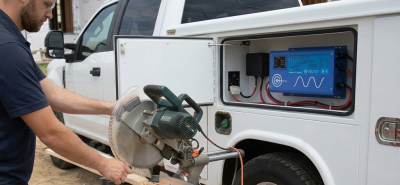
- Remote Management: For installations where the inverter is mounted out of sight inside a utility box or a specialized cargo compartment, adding a remote control switch allows the operator to power the system on and off conveniently from the front seat.
Equipping Your Fleet With AIMS Power
AIMS Power is a trusted United States-based manufacturer with more than 25 years of experience engineering advanced power conversion equipment and mobile electrical solutions. We provide the heavy-duty hardware required to build dependable high-wattage power setups for service trucks, commercial fleets, and contractor vehicles. From industrial-grade power inverters and batteries to complete solar integration kits, we manufacture reliable equipment built to withstand demanding field environments.
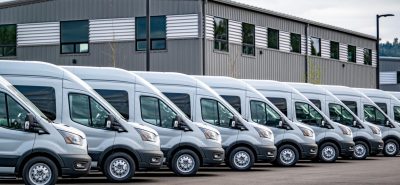
Our in-house technical support team collaborates directly with fleet managers and upfitters to configure custom power systems tailored to your exact operational scope. From outfitting a single service van to standardizing the electrical architecture across an entire commercial fleet. AIMS Power delivers a complete solution designed for maximum durability and efficiency.
To upgrade your vehicle’s electrical resilience and review equipment options for your project, browse the full line of AIMS Power solutions to find the exact match for your work truck power requirements.