Best Off-Grid Solar for Remote Irrigation
The Short Answer: The best off-grid power for remote irrigation is a solar power system sized to run the water pump and any controls, with a battery bank to cover cloudy spells and watering outside peak sun. A solar irrigation system pairs a solar array with a charge controller, batteries, and an inverter when the pump needs AC, so a pump far from the grid runs on sunlight instead of diesel or a long utility extension. For an installer, the design work is matching the power system to the pump’s draw and the site’s water and sun conditions.
Running irrigation where there is no grid usually means one of two things, a diesel pump that burns fuel and needs refueling trips, or a utility line extension that costs more the farther the field sits from existing power.
A solar irrigation system removes both problems. It generates power at the field, stores what it does not use, and runs the pump on a schedule the site actually needs. For solar installers and integrators speccing these systems, the payoff is a build that holds up with little maintenance once it is in, and the design comes down to a handful of decisions covered below.
Where These Systems Fit
Off-grid solar irrigation systems show up across a range of builds.
Remote Farm Fields
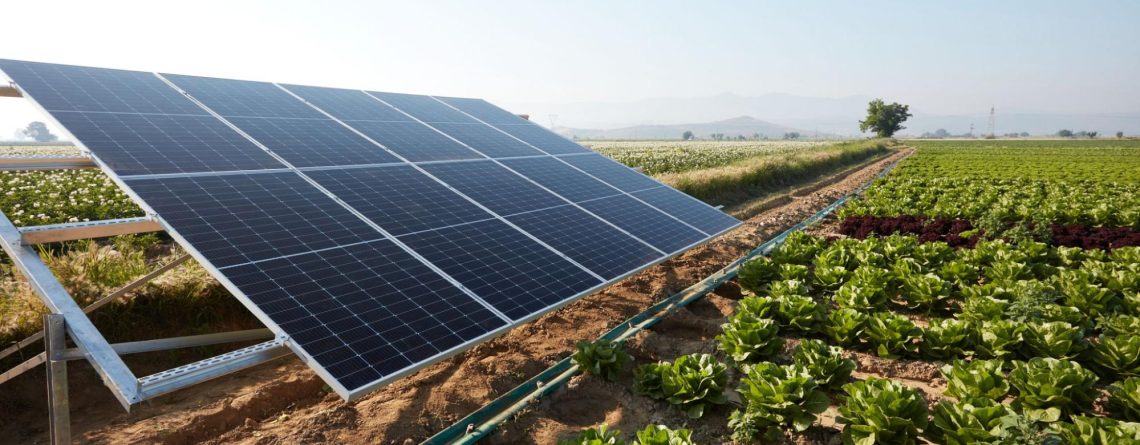
Fields that sit well beyond the grid, where a utility extension would cost more than the irrigation itself, run a pump on a self-contained solar system instead. This is common where water scarcity pushes operations to irrigate land that has no nearby power.
Drip and Precision Irrigation
A drip irrigation system uses a steady, lower-flow pump that pairs cleanly with solar, and the lower water demand keeps the power system smaller. Adding soil moisture sensors or a controller on the irrigation side trims pump runtime further, which cuts the solar and battery capacity the system needs.
Water Transfer and Tank Fill
Systems that pump from a well or water source into a water tank during the day give flexibility, since the tank stores water the way a battery stores energy, sometimes reducing how much battery capacity the build needs. This also helps manage limited water resources, since the tank buffers supply for the whole irrigation schedule.
Why Solar Is the Right Fit for Remote Irrigation
Irrigation is one of the cleanest matches for off-grid solar.
Water Demand Peaks With the Sun
The demand and the supply line up, water is needed most when the sun is strongest, and a pump is a predictable load that is straightforward to size for.
Low Fuel and Energy Costs
The economics favor it too. After the system is installed, sunlight is free, so the fuel and electricity costs that make up a large share of irrigation operating costs drop toward zero. A diesel pump ties the operation to fossil fuels, refueling trips, and engine upkeep, while a solar system runs on renewable energy it generates at the field.
For a grower, that shows up as lower operational costs, energy savings, and no exposure to fuel price swings. Cutting on-site diesel also lowers carbon emissions, which matters for operations tracking their environmental impact.
Reliable, Automatic Operation
Reliability is the third reason. A diesel pump is one breakdown or one missed fuel delivery away from a dry field. A well designed solar system has no engine to service and runs automatically, which matters most on remote sites where a service call can take hours. Steady water delivery also protects crop yield, since under watering during a pump outage can ruin a season’s growth.
The Parts of a Solar Irrigation System
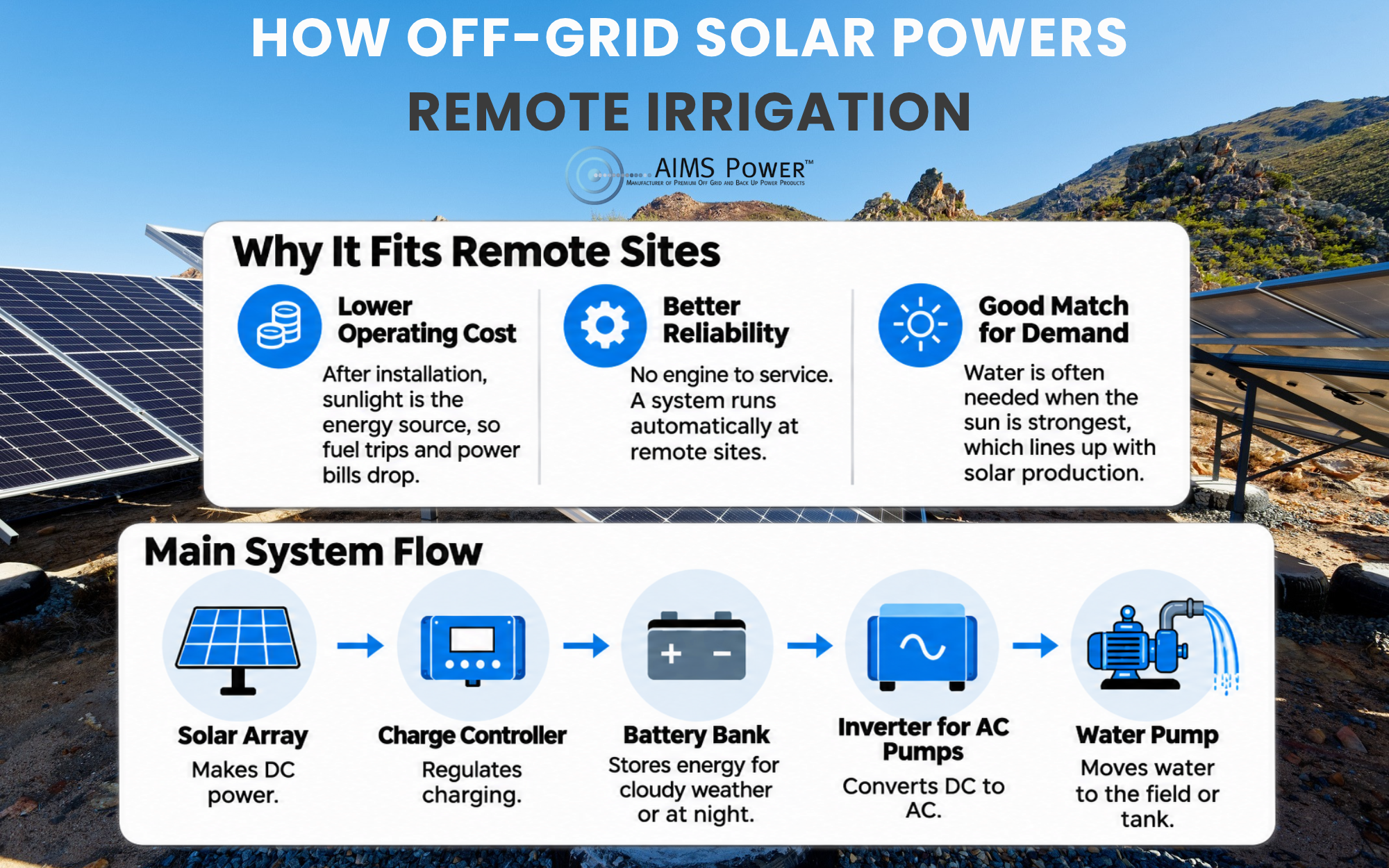
A solar irrigation system is a standard off-grid power system with a pump as the load. The components are the same ones found in any off-grid build.
Solar Array
The solar panels convert sunlight into DC electricity. The array size is set by the pump’s energy use over a day and the site’s solar radiation, so a site with strong sun needs fewer panels for the same water output than a cloudy or high latitude one. Site solar radiation and local weather conditions are the environmental factors that decide how many panels your build needs.
Charge Controller
The solar charge controller sits between the array and the battery bank and regulates the charge. An MPPT controller pulls more usable power from the array than a basic one, which shortens charge time and lets a given array be more efficient, useful when panel space or budget is capped. The solar controller is also what protects the batteries from overcharge.
Battery Bank
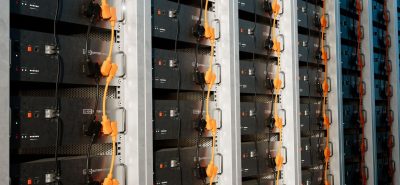
The battery bank stores energy so the system can run the pump outside peak sun, on cloudy days, or on a schedule that does not line up with midday. Not every build needs storage, a system that only pumps into a tank during the day can sometimes skip it, but the rechargeable battery bank is what makes an irrigation schedule flexible and provides back-up power in case of emergencies.
Inverter
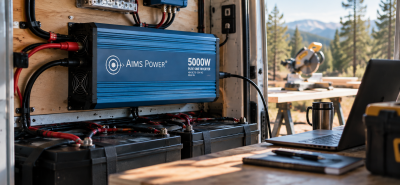
Many irrigation pumps run on AC power. When they do, a pure sine wave inverter converts the battery’s DC into the AC electricity the pump motor needs, with a clean waveform that runs the motor without the overheating a rough waveform can cause. A DC solar-powered pump can skip the inverter and run from the battery directly.
Sizing the Power System to the Pump
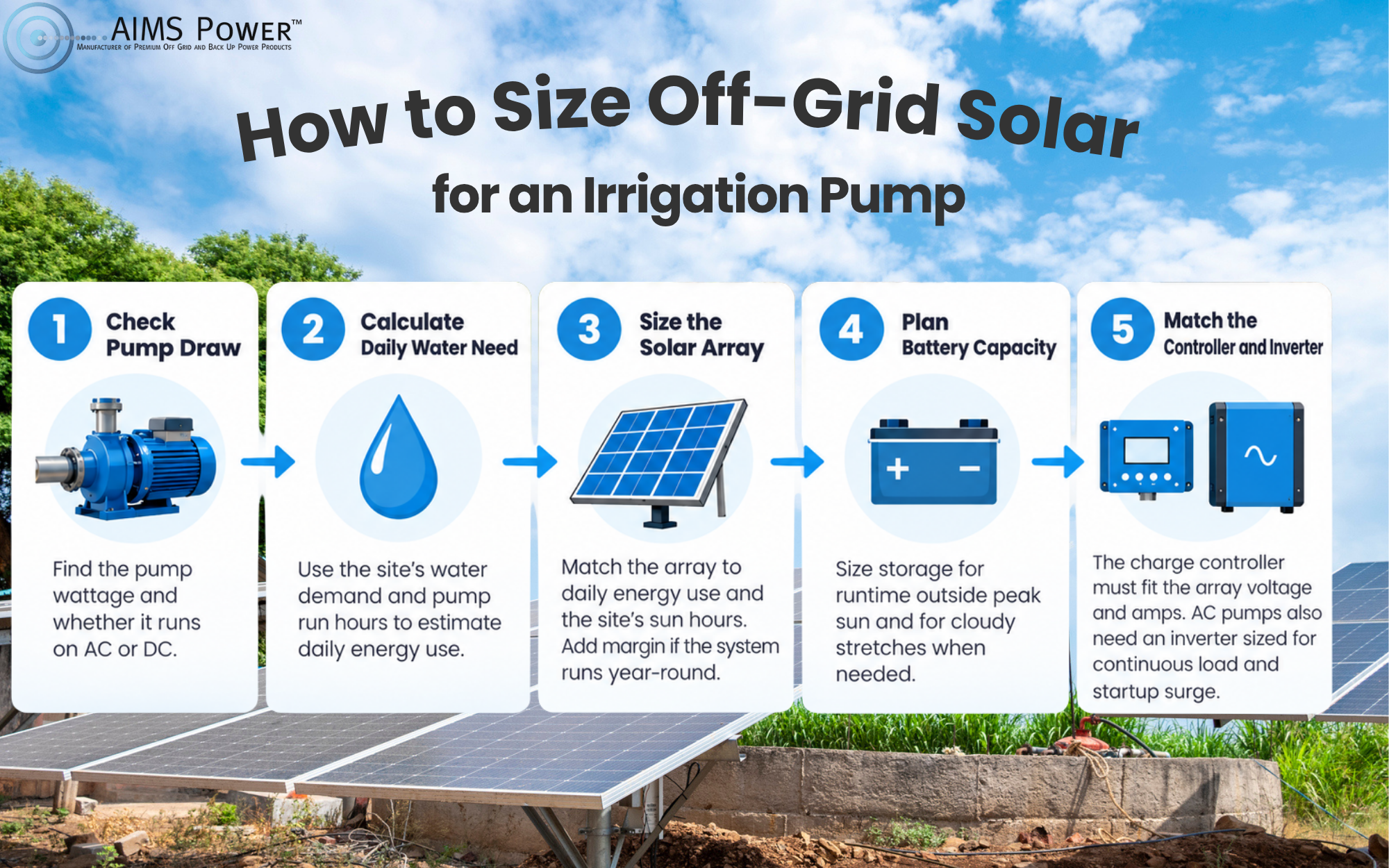
The whole design starts with the pump, because the pump is the load everything else has to support.
- Pump power draw: Find the pump’s wattage, its rated voltage, and the type of power it runs on, AC or DC. Voltage matters as much as wattage here, since some irrigation pumps require 240V and need an inverter that outputs it. An AC pump needs an inverter rated for its continuous draw plus the surge it pulls at startup, at the pump’s voltage.
- Daily water need: Work out how much water the site needs per day and how many hours the pump runs to deliver it. That sets the daily energy the system has to produce. Lower water consumption means a smaller system, so efficient watering pays off twice.
- Solar array size: Size the array to generate that daily energy at the site’s sun hours, with margin for shorter winter days if the system runs year-round.
- Battery capacity: Size the bank for the runtime needed outside peak sun, plus a reserve for cloudy stretches. Match the battery voltage to the inverter and controller.
- Controller rating: Confirm the charge controller’s amp and voltage ratings cover the array, with the open circuit voltage staying inside the controller’s input limit in cold conditions.
Always calculate your output and needs based on the worst day so you can keep the field watered on the shortest, cloudiest day the system has to cover, not just on an average or sunny one.
Designing the System With AIMS Power
AIMS Power is a U.S.-based manufacturer with more than 30 years building solar and power conversion equipment, backed by in-house technical support. AIMS builds the full off-grid power side of an irrigation system, solar panels, MPPT charge controllers, deep cycle batteries, and pure sine wave inverters, and sells them as matched off-grid solar kits so the parts are designed to work together.
For installers and integrators speccing power for remote irrigation, that means one source for the equipment and the help to size it to the pump and the site. If you are designing a system or sourcing at volume, contact AIMS Power to find the right fit or to talk through OEM and reseller options.