Adding Battery Backup to a Commercial Solar System
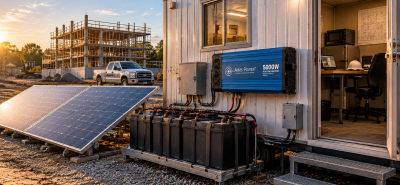
The Short Answer: Adding commercial battery backup to an existing solar array transforms it from a simple daytime energy offset into a continuous power solution. While standard grid-tied solar panels shut down during a power outage, integrating battery storage allows industrial facilities and office buildings to capture excess solar energy for use during off-peak hours or grid failures. This upgrade provides reliable backup power, lowers overall energy cost through load shifting, and offers uninterrupted operations for a facility’s most critical load.
Relying entirely on the municipal utility grid leaves business operations completely vulnerable to sudden power interruptions and constantly fluctuating rate structures. When a facility generates its own power through renewable energy sources but lacks an internal battery or external energy storage, it sends valuable excess production back to the utility company, often at a reduced wholesale credit rate.
Integrating a dedicated commercial battery backup system allows businesses to take greater control of their energy usage. By storing energy locally on the premises, facility managers can slash operational costs through peak shaving and keep sensitive electronics, emergency lighting, and critical systems running smoothly when the utility grid drops.
The Business Case for Battery Storage Systems
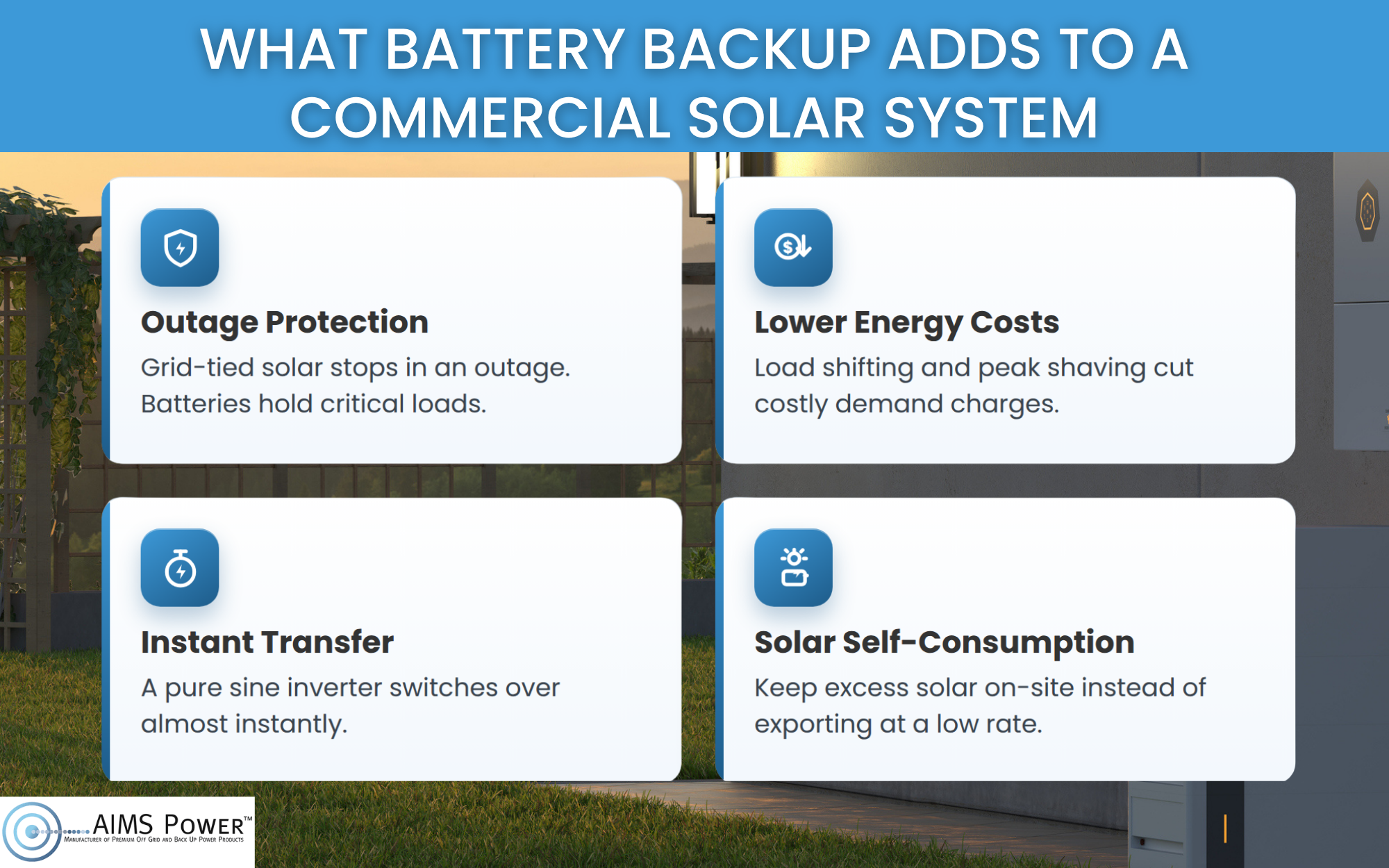
Adding a battery backup system to an existing solar array is a direct investment in energy resilience and long-term cost control. Standalone grid-tied commercial systems generate power only when the sun is shining, and they automatically disconnect during a grid failure to protect utility workers repairing the lines. A dedicated battery system solves this limitation by creating a localized microgrid.
By capturing and holding energy from renewable sources, companies reduce their carbon footprint while reducing energy dependence. The financial return centers heavily on how the system manages the facility’s daily power requirements. Through strategic charging and discharging, the battery offsets the extremely high utility rates that traditionally impact heavy commercial power users. Facility managers can forecast their power expenses accurately, bypassing unpredictable grid rate hikes and securing a stable electrical foundation for long-term growth.
Load Shifting and Peak Shaving
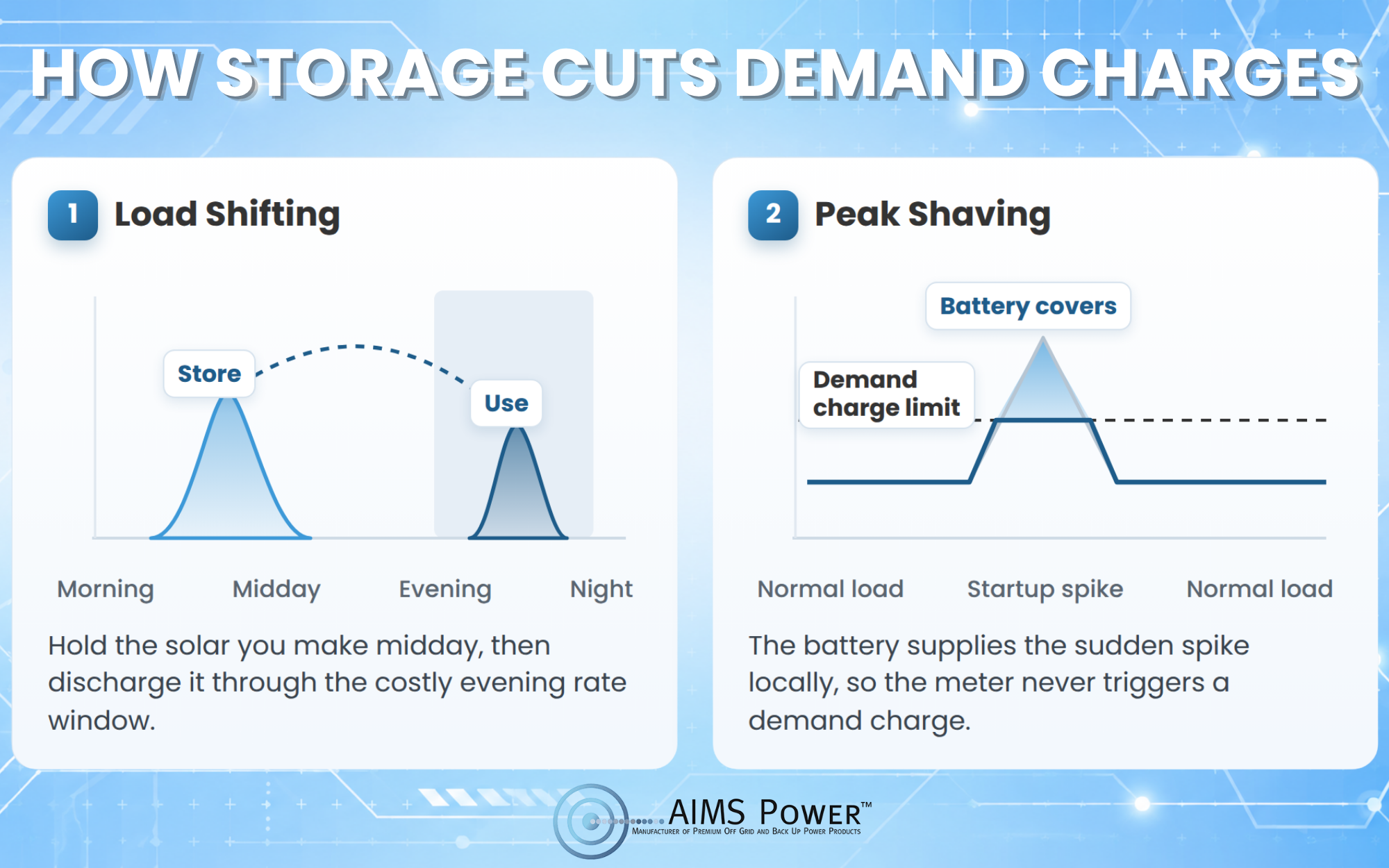
For many heavy industrial applications, the highest monthly electricity expense does not come from total kilowatt-hours consumed. Instead, it comes from demand charges, which are heavy utility fees based on the absolute highest point of energy consumption during a billing cycle. A commercial battery actively works to flatten this consumption curve and mitigate these penalties.
Load Shifting
A facility uses its storage systems to hold solar energy generated during the morning and early afternoon. When utility rates spike during evening peak hours, the system discharges the stored energy to power the building. This completely avoids the most expensive grid pricing windows and creates an immediate impact on the monthly budget.
Peak Shaving
When large equipment, such as a high-draw manufacturing compressor or an electric commercial vehicle charging station, powers on, it creates a massive, sudden spike in electrical demand. The battery storage unit automatically steps in to supply that peak power locally, preventing the utility meter from registering the surge and triggering heavy demand fees.
This active, automated management of energy efficiency turns a passive solar array into a dynamic financial asset that protects the bottom line every single day.
Protecting Critical Systems During Power Interruptions
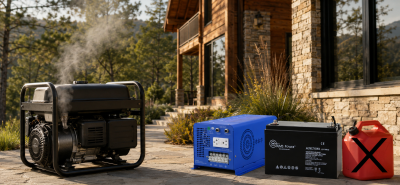
A severe power outage brings production to an immediate halt and compromises valuable digital data. Traditional fuel-based generators can take several seconds to detect an outage, spin up the engine, and transfer the load. That delay is long enough to crash servers in a data center or disrupt heavily automated manufacturing lines.
An advanced commercial battery backup system paired with a pure sine wave inverter and automatic transfer switch provides a nearly instantaneous transfer of power. When the grid fails, the backup systems immediately take over, providing clean, stable AC power to the dedicated critical load panels.
This seamless transition protects sensitive electronics, maintains emergency lighting, keeps telematics and networking hardware online, and ensures uninterrupted operations until the primary grid comes back online or a supplementary fuel generator safely takes over the heavy lifting.
Matching Battery Technology to Commercial Application
Selecting the right energy storage medium dictates the overall battery life and how well the system handles heavy commercial duty cycles.
Lithium Iron Phosphate vs. Lead Acid
Lead Acid
For decades, flooded lead acid and AGM batteries served as the standard for both residential systems and early commercial backup power. While inexpensive upfront, they require regular maintenance, offer a very limited cycle life, and cannot be deeply discharged without losing cell efficiency.
Lithium Iron Phosphate
Today, modern lithium iron phosphate (LiFePO4) technology dominates the commercial sector. These advanced lithium-ion batteries provide exceptional power density, meaning they pack far more usable energy into a much smaller physical footprint.
They handle thousands of deep discharge cycles safely, require near zero active maintenance, and deliver a consistent voltage output even under heavy load. This chemical stability ensures reliable power for high-draw power tools, inductive motors, and heavy industrial machinery.
Solar Self-Consumption and System Architecture
Maximizing solar self-consumption means storing every possible kilowatt generated on-site rather than exporting it to the utility provider at a lower wholesale rate. This requires an electrical architecture built to properly manage high DC power inputs and convert them into usable facility power with high efficiency.
The Hybrid Inverter as the Central Controller
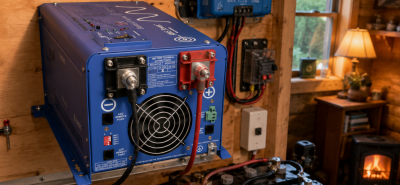
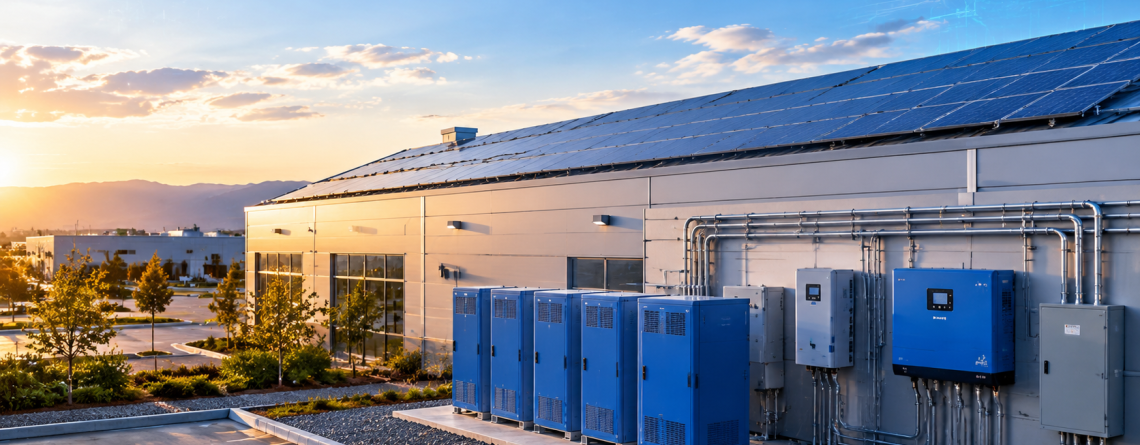
Integrating commercial solar panels with battery storage requires an inverter capable of managing multiple energy sources simultaneously. A hybrid inverter functions as the central logic brain of the operation. It directs incoming solar energy to charge the batteries, supply the building’s active AC loads, or feed the grid based on strict programmed priorities. Built with advanced power electronics and modern silicon carbide components, these highly capable inverters reduce thermal loss and drastically increase overall inverter efficiency.
Standardizing Equipment Across Stationary and Mobile Applications
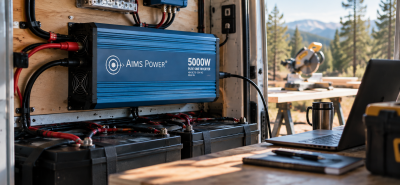
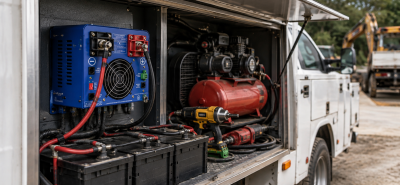
Whether a large-scale operation utilizes a stationary setup for a warehouse or requires a dedicated power solution for a mobile service or heavy utility truck, standardizing the electrical system with high quality equipment simplifies the supply chain. This standardization reduces the need to stock varying replacement parts and allows maintenance technicians to train on a single, unified power platform.
Integrating Commercial Battery Backup with AIMS Power
AIMS Power is a United States based manufacturer with more than 20 years of experience engineering advanced power conversion equipment and renewable energy solutions. We provide the technical expertise and hardware required to build a safe, efficient, and highly capable energy storage architecture from the ground up.
Our in-house technical support team works directly with businesses, contractors, and industrial operators to configure custom power systems. AIMS Power delivers a complete solution matched to your specific needs. Our equipment requires minimal upkeep while maintaining strict functional safety standards across all installations.
To upgrade your facility’s energy resilience and review equipment options for your project, browse the full line of AIMS Power solutions to find the exact match for your commercial battery backup program.