How to Prepare for a Power Outage: Keeping Critical Systems Running
The Short Answer: Preparing for a power outage starts with knowing which systems are vital and cannot go dark, then putting backup power in place to keep them online until the grid power returns. For a business, that usually means a battery bank paired with an inverter charger that switches on automatically the moment the utility drops, so critical loads keep running. A full preparation plan also covers outage alerts, surge protection for sensitive equipment, and the supplies and contacts a team needs to get through a long outage.
A power outage rarely arrives at a convenient time. Severe weather, a winter storm, a downed power line, or a failure upstream at the utility can cut power for anywhere from minutes to weeks.
For a home, that is an inconvenience. For a facility running medical equipment, refrigeration, servers, or any process that cannot stop, it is a risk to safety, inventory, and revenue. Knowing how to prepare for a power outage, and building the backup power to match, is what keeps the lights and the critical systems on when the grid goes down.
Start by Identifying Your Critical Loads
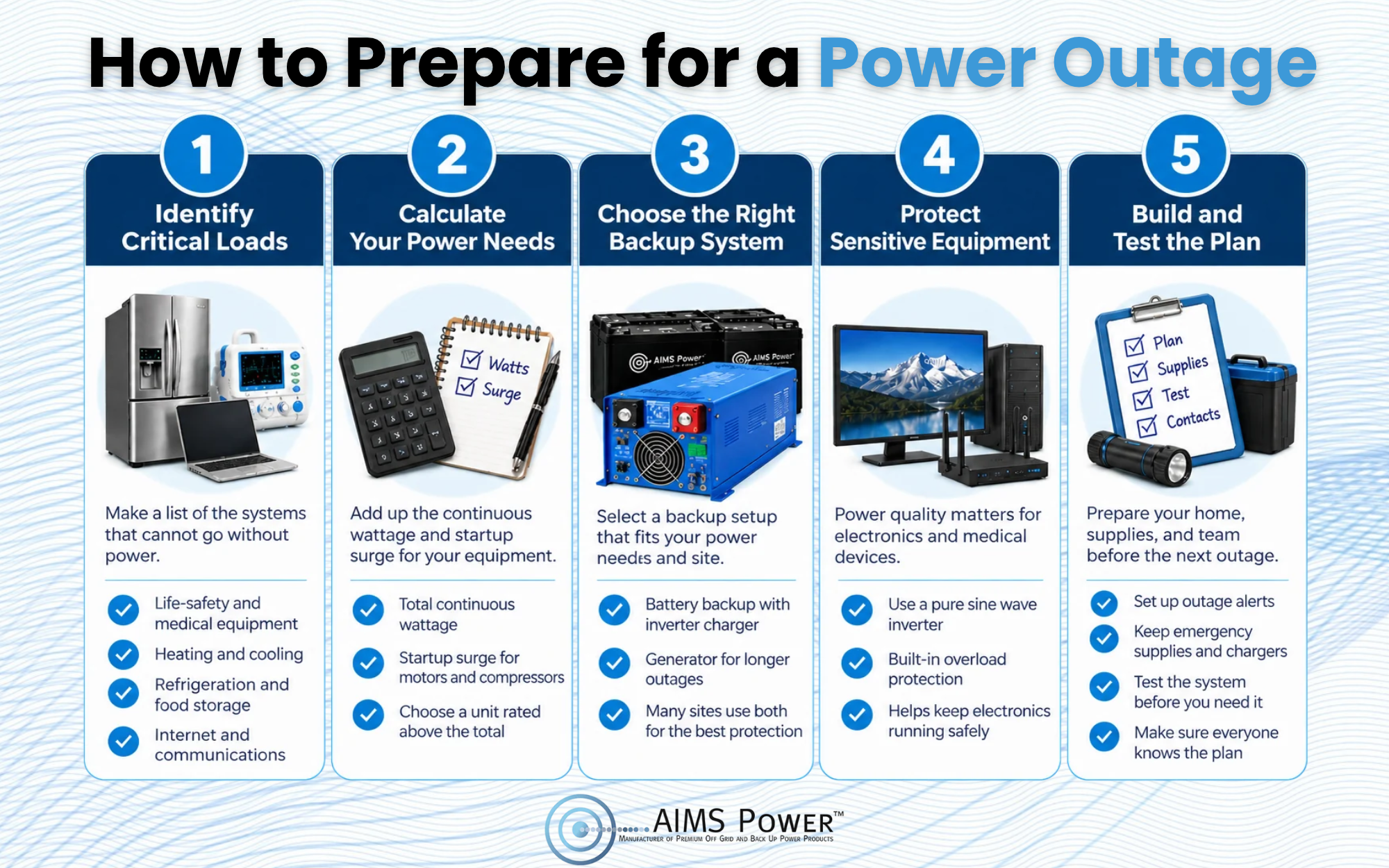
Before sizing any equipment, list what actually has to keep running. Not every circuit is critical, and trying to back up everything drives up usage fast. Sort the loads into tiers:
- Life-safety, vital, and medical: Any medical device or life-support equipment, emergency lighting, and fire or security systems. These cannot lose power even briefly.
- Process and inventory: Refrigeration, freezers, pumps, and any process that spoils product, loses inventory, or causes damage if it stops.
- Operations: Servers, point-of-sale, communications, and the electronic devices a team needs to keep working.
Once the critical loads are grouped, add up their continuous wattage and the surge that motors and compressors pull at startup. That total is what the backup power system has to carry, and it drives every sizing decision that follows. The CISA Resilient Power Best Practices for Critical Facilities and Sites guide is a useful reference for how critical facilities approach this step.
Choose the Right Backup Power
Backup power for critical systems comes down to two broad approaches, a fuel generator or a battery based system, and many sites use both.
Battery Backup With an Inverter Charger
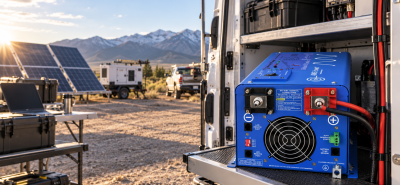
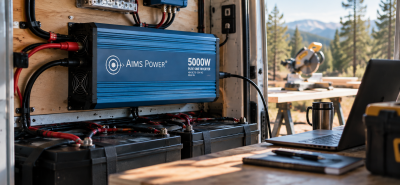
A battery backup system stores energy and uses an inverter to turn it into AC power on demand. Pair it with an inverter charger and the unit does three jobs in one: it runs loads from the battery, recharges the battery from the grid or a generator, and switches between sources automatically through a built-in transfer switch. When the utility drops, the transfer happens in milliseconds, so sensitive equipment stays online with no interruption.
A battery backup runs silently, produces no emissions, and can sit indoors, which matters because it sidesteps the carbon monoxide risk that comes with fuel units. Runtime depends on battery capacity, so a deep cycle battery bank sized to the critical load determines how long the system carries equipment before it needs a recharge.
Portable and Backup Generators
A portable generator or a larger backup generator burns fuel to make AC power, so it runs as long as fuel is available. That makes it a fit for long outages where refueling is practical, but the tradeoffs are important to know.
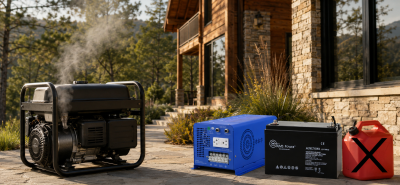
A generator gives off carbon monoxide and has to run outdoors, away from doors, windows, and air intakes, and it needs regular maintenance to stay reliable. Conventional units also produce a rougher waveform that can be hard on sensitive equipment, so critical electronics often sit behind an inverter or a surge protector even when a generator is the main source. California is already phasing out gas-powered portable generators, and new models there must meet zero-emission standards starting with the 2028 model year.
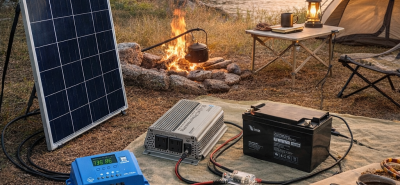
For sites that want portable backup without the fuel and emissions, an AIMS portable solar generator packs a battery, an inverter, and solar charging into one unit that runs quietly and can sit indoors.
Pairing Battery and Solar
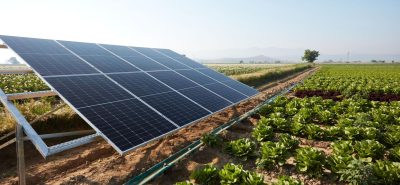
Adding solar panels to a battery system lets it recharge during daylight, which extends backup power through a multi-day outage without burning fuel. For sites that want reliable power with the least ongoing upkeep, a battery and solar system backed by a generator for the longest events covers the widest range of conditions.
Protect Sensitive Equipment
Keeping power flowing is only half the job. The quality of that power matters just as much for sensitive equipment.
- Use a surge protector on electronic devices and any sensitive electronics, since the moments when power drops and returns are when damaging surges happen.
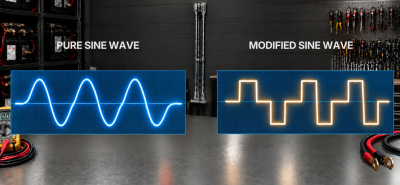
- Run critical electronics on a pure sine wave source. A clean waveform prevents the overheating and faults that a rough waveform can cause in medical equipment, servers, and motor-driven gear.
- Have a licensed electrician install any permanent transfer equipment and confirm the electrical system is set up to isolate backup power from the grid safely. Backfeeding a power line endangers utility crews, so this is a safety precaution that is not optional.
Build the Plan Around the Equipment
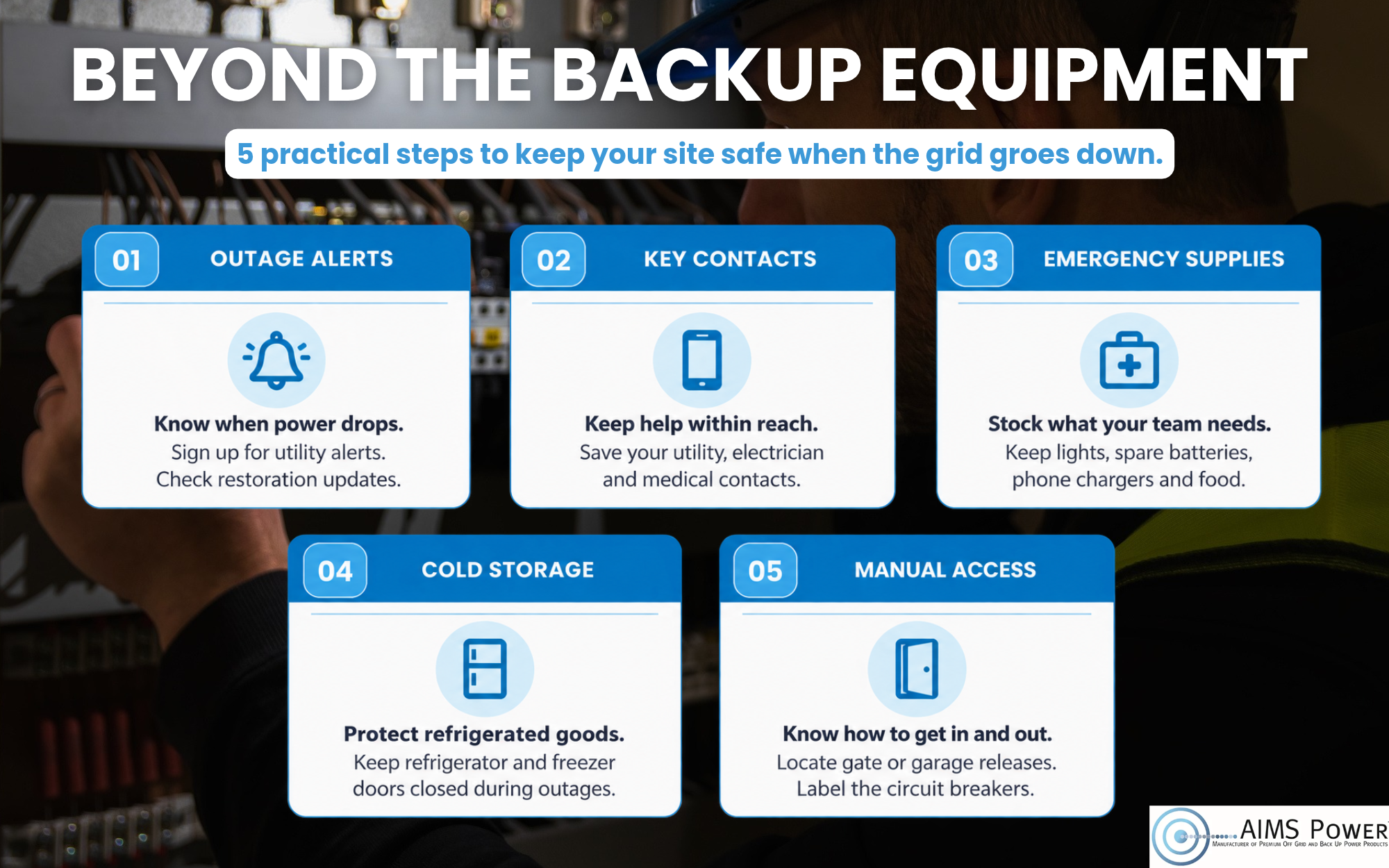
Hardware is the core, but a full outage plan covers the people and supplies too. Even a well equipped site needs a few things in place before the next outage.
- Outage alerts: Sign up for outage alerts from your utility provider so the team knows when power is down and when to expect it back.
- Contacts: Keep contact information for the utility company, a licensed electrician, and any medical provider or healthcare provider current and easy to find.
- Supplies: Stock an emergency kit with emergency lighting, extra batteries, a portable charger for each cell phone, and nonperishable food for staff working through a long event.
- Cold storage: During the outage, keep refrigerator and freezer doors closed. A full freezer holds its temperature far longer than an empty one, and an unopened refrigerator protects dairy products and other perishables for hours.
- Access and settings: Know how to open a powered garage door or gate by hand, and confirm the circuit breaker layout so the team can isolate circuits if needed.
Following the manufacturer’s instructions for every piece of backup equipment and testing the system before you need it is what separates a plan that works from one that fails on the first real outage.
Keeping Critical Systems Running With AIMS Power
AIMS Power is a U.S.-based manufacturer with more than 25 years building power conversion and renewable energy equipment, backed by in-house technical support. AIMS builds the battery-based side of a backup power system: inverters, inverter chargers that combine inversion, charging, and automatic transfer in one unit, deep cycle batteries for storage, and solar equipment to extend runtime.
For facilities, fleets, and businesses that need to keep critical systems running through an outage, that means one source for the equipment and the help to size it to the critical load. If you are planning backup power for a site or sourcing at volume, contact AIMS Power to match a system to your loads or to talk through OEM and reseller options.