Pure Sine vs. Modified Sine Wave Inverters: Which Your Equipment Needs
The Short Answer: A pure sine wave inverter produces AC power that matches the smooth curve of the utility grid, which is what sensitive electronics, medical equipment, and anything with an AC motor need to run safely. A modified sine wave inverter uses a cheaper stepped waveform that works for simple resistive loads but can cause buzzing, heat, or potential damage in more demanding equipment. For most commercial and critical applications a pure sine wave inverter is the safer option, and modified sine wave is best saved for basic loads where cost leads.
Every inverter turns direct current from a battery into the AC power that equipment runs on, but not every inverter makes that power the same way. The difference in a modified vs pure sine wave inverter comes down to the shape of the waveform it produces, and that shape decides what you can safely plug in.
For an OEM spec’ing a build, an installer sizing a system, or a fleet manager standing up mobile power, picking the wrong type can mean equipment that runs hot, fails early, or never works at all.
The price gap between the two types is real enough to be tempting, but the cost of the wrong choice shows up later, in damaged equipment or a system that cannot carry the loads it was bought for. Knowing how the two compare keeps the equipment protected and the system matched to the job.
How the Waveform Differs
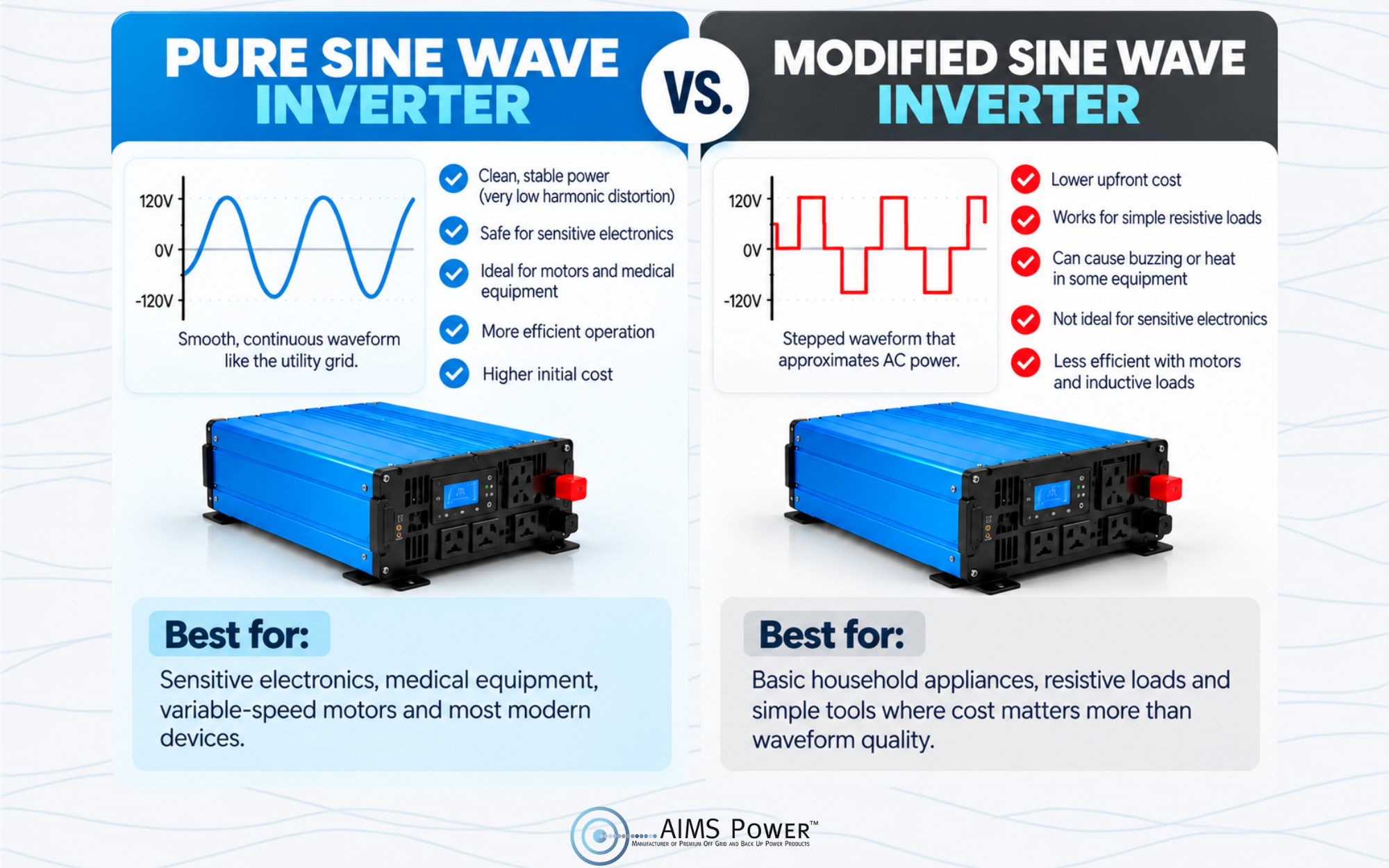
AC power on the utility grid follows a sine wave, a smooth curve that rises and falls many times per second. Equipment that plugs into a wall outlet is engineered around that curve, so the closer an inverter comes to reproducing it, the more equipment it can run without trouble. How faithfully an inverter copies that shape is what separates the two main types.
Pure Sine Wave
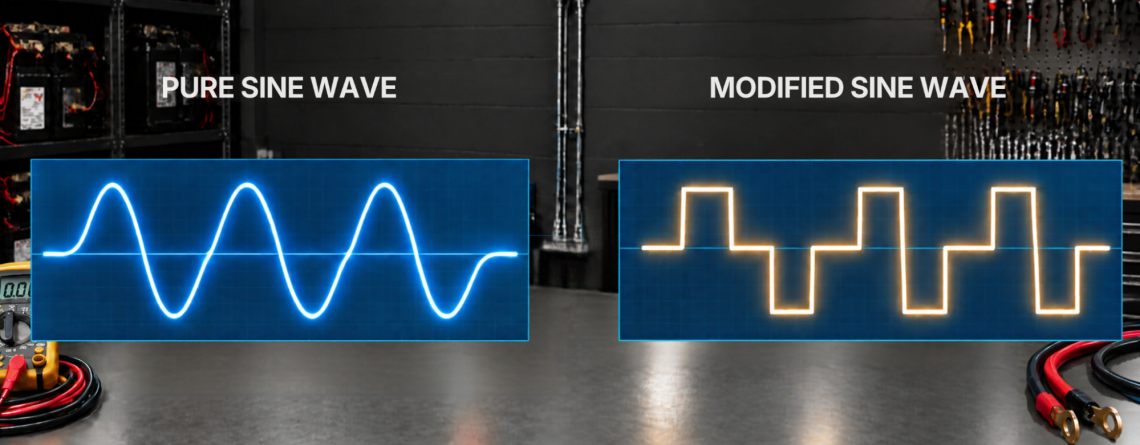
A pure sine wave inverter produces a continuous waveform nearly identical to grid power. Sinewave inverters like these measure very low on total harmonic distortion, often around 3%, which is the figure that keeps sensitive electronics running clean.
That clean output is why pure sine power has become the standard for anything built to run on a wall outlet, and why most new equipment consumes it. The tradeoff is cost, since producing a smooth curve takes more complex electronics than a stepped approximation does.
Modified Sine Wave
A modified sine wave inverter, approximates the curve with a stepped waveform that jumps between voltage levels instead of easing through them. It sits somewhere between a true sine wave and a square wave, so the output is closer to a choppy wave than a smooth one.
That rougher waveform carries much higher harmonic distortion, which is where the tradeoffs start. The upside is price, since a modified inverter uses simpler switching and costs less to build.
What Each Type Can Run
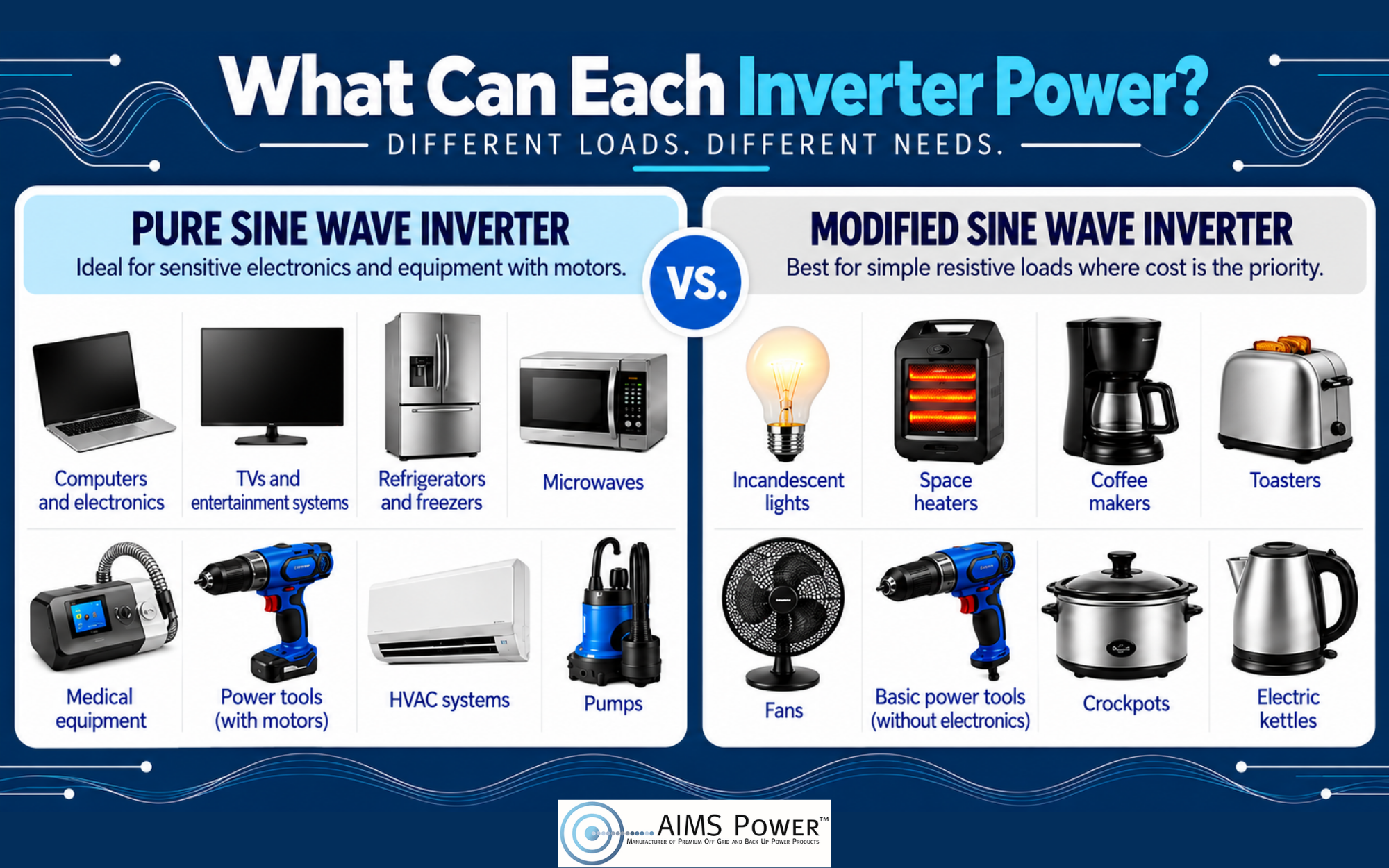
The waveform decides which loads are safe. Resistive loads, like a heating element or a simple tool, tolerate a modified sine wave without much trouble, because they do not care about the shape of the power feeding them. Inductive loads and anything with electronics are more particular, since they rely on the timing and smoothness of the waveform to run correctly.
Load type | Pure sine wave | Modified sine wave |
Sensitive electronics, medical devices | Recommended | Risk of damage |
Audio equipment, variable-speed motors | Recommended | Buzz, heat, inefficient operation |
Microwave oven, many home appliances | Full output | Reduced output, longer run time |
Resistive loads (heaters, basic tools) | Works | Works (Check manufacturer’s guidance before use) |
Battery chargers, some power supplies | Works | May run hot or fault |
Pure Sine Wave Inverters for Sensitive Equipment
A pure sine inverter is the right call for sensitive equipment of any kind. Medical equipment, audio devices, variable-speed AC motors, and most electronic equipment are designed around the clean power the grid delivers, and they can misbehave on anything rougher. For these loads, pure sine wave power is less a preference than a requirement, and it is the only waveform that lets equipment perform the way its manufacturer intended.
Where Modified SIne Wave Still Fits
A modified inverter still earns its place on simple jobs. For resistive loads and basic household appliances where cost matters more than waveform quality, a modified sine wave inverter delivers usable AC power at a lower price.
Incandescent lighting, resistive heaters, and many basic hand tools run on it without issue. The limitation shows up the moment a sensitive device or an inductive load enters the picture, so a modified inverter is best matched to a known, fixed set of simple loads rather than a system that has to handle anything that gets plugged in.
How Waveform Affects Efficiency and Battery Life
Beyond what will and will not run, the waveform also changes how efficiently a system uses its stored energy. A motor fed a modified sine wave draws more current to do the same work, which shows up as heat in the motor and as inefficient operation across the system.
Effects on Batteries
That wasted energy comes straight out of the battery, so a modified sine wave setup can shorten runtime on the same battery bank compared with a clean pure sine source. In battery systems where every amp-hour counts, like a mobile fleet unit or an off-grid solar setup, that difference adds up over a long day.
Pairing a pure sine wave inverter with the battery and solar panel capacity feeding it keeps the whole system running closer to its rated efficiency, which is part of why most modern solar inverter and hybrid designs output pure sine by default.
The Risk of the Wrong Waveform
Heat, Noise, and Early Failure
Running the wrong equipment on a modified sine wave is where risk can turn into permanent damage. The stepped waveform can overheat AC motors and transformers, cause audible buzzing in audio equipment, and lead to inefficient operation that wastes battery capacity.
Timing and Startup Problems
Devices with timing circuits, like some clocks and controllers, can run fast, slow, or erratically because they read the waveform to keep time. Certain power supplies run hot enough to shorten their own life, and a few electronic devices refuse to start at all.
Critical and Medical Loads
For medical devices and other critical electronic equipment, that risk is rarely worth the savings, which is why facilities and OEMs that cannot afford a failure specify pure sine from the start rather than discovering the limits in the field.
It also helps when the person choosing the inverter is not the one who will plug equipment into it later, since a pure sine source runs practically whatever the grid would and removes the guesswork about what is safe to connect.
Matching the Right Inverter With AIMS Power
AIMS Power has spent more than 25 years, since 2001, building power inverters and battery systems for any application. Our lineup covers pure sine wave inverters for sensitive electronics and critical loads, along with modified sine wave inverters for simpler jobs where cost leads, so a build can be matched to its loads instead of forced into one option.
If you are spec’ing a build, sizing a solar or battery system, or sourcing inverters at volume, contact AIMS Power to match the right waveform to your equipment or to talk through OEM and reseller options.