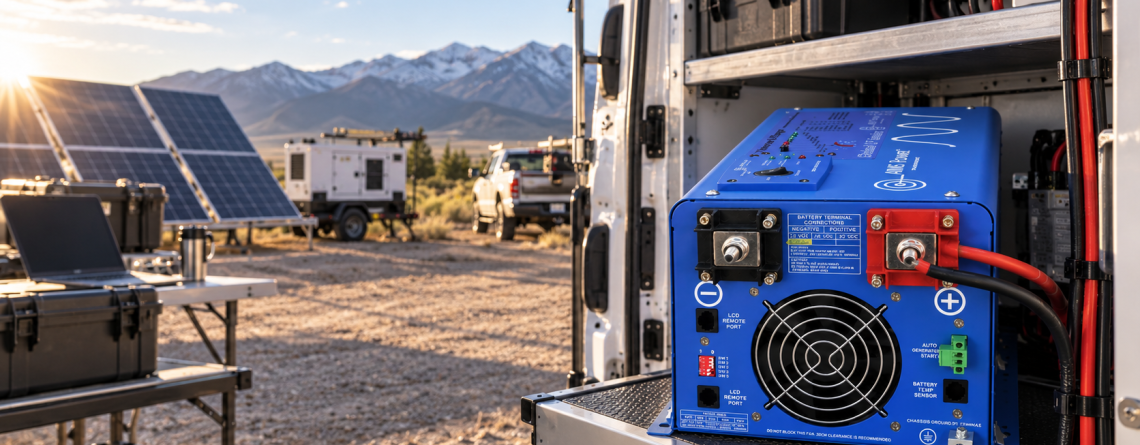
When a Commercial Application Needs an Inverter Charger
The Short Answer: An inverter charger combines two devices in one, an inverter that turns battery power into AC electricity, and a battery charger that refills the battery from shore power or a generator. It also includes a built-in transfer switch that flips between the two sources automatically. A commercial application needs one when it both runs AC loads from a battery and connects to an outside power source, so a single unit handles inverting, charging, and switching instead of three separate components.
A plain inverter turns DC into AC and stops there. Plenty of commercial builds need more than that; they run equipment off a battery bank when there is no outside power, then charge that bank back up when shore power or a generator is available, and they need the handoff between the two to happen without anyone flipping a switch. That is the job for an inverter charger. Knowing when a build calls for one, versus a standalone inverter plus a separate charger, is what keeps a system simpler, more reliable, and easier to service.
What an Inverter Charger Actually Combines
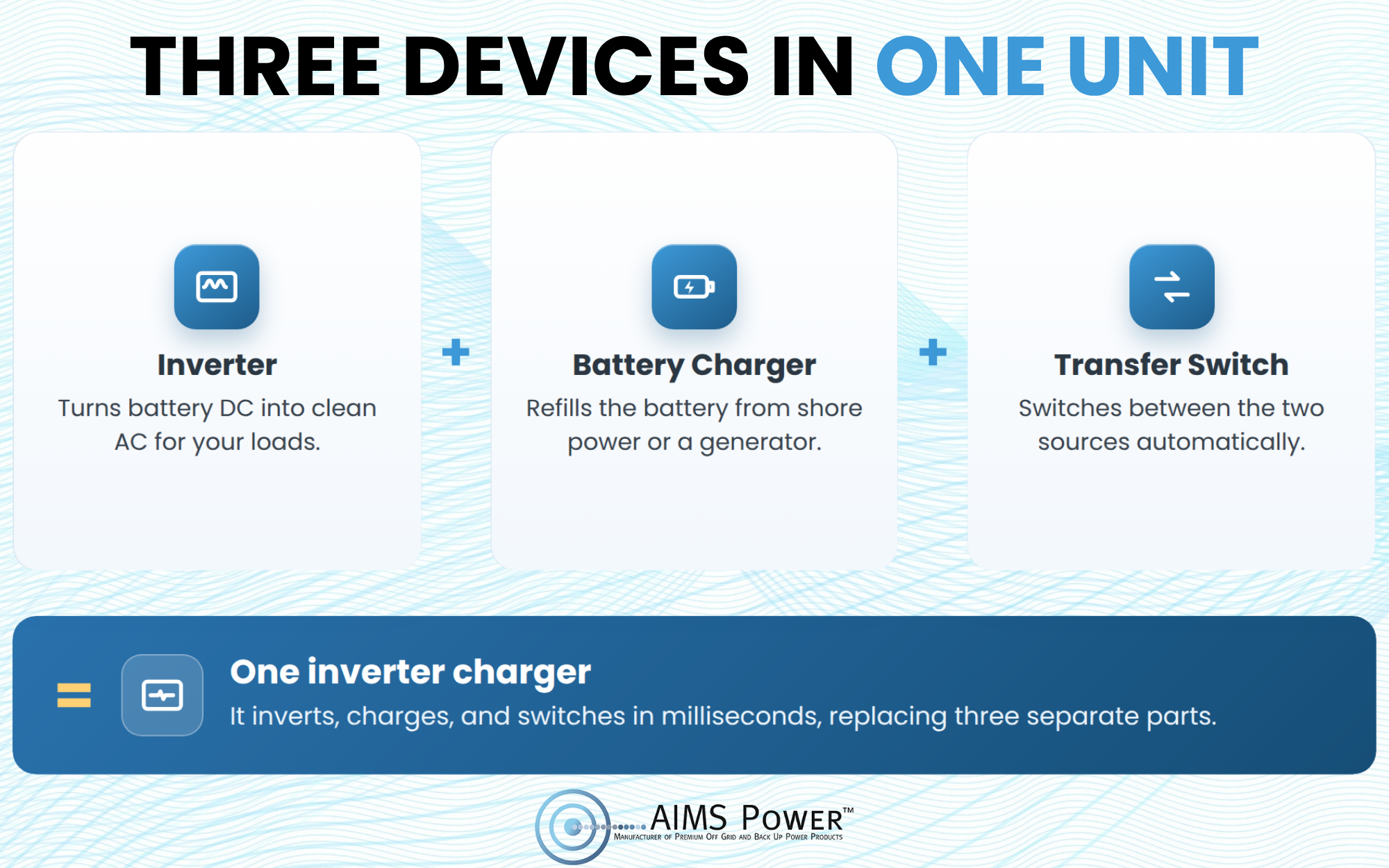
An inverter charger is a single unit that holds three functions that would otherwise be separate pieces of equipment.
The inverter side takes battery power and converts it into AC electricity to run household appliances, tools, and equipment. A pure sine wave inverter produces clean power close to grid quality, which is what sensitive electronics need to run without buzzing, overheating, or faulting.
The charger side reverses the flow. When AC power is available from shore power or a generator, the built-in battery charger converts that AC back into DC to refill the battery bank. AIMS inverter chargers offer multiple battery type settings so the charge profile matches the battery, and support a battery temperature sensor that adjusts charging as battery temperature changes.
The transfer switch ties the two together. When an outside AC source is connected, the unit passes that power through to the loads and charges the battery at the same time. When the source disconnects, the inverter takes over from the battery, with the transfer happening automatically in milliseconds. No manual switching, no gap in power.
Signs a Commercial Application Needs an Inverter Charger
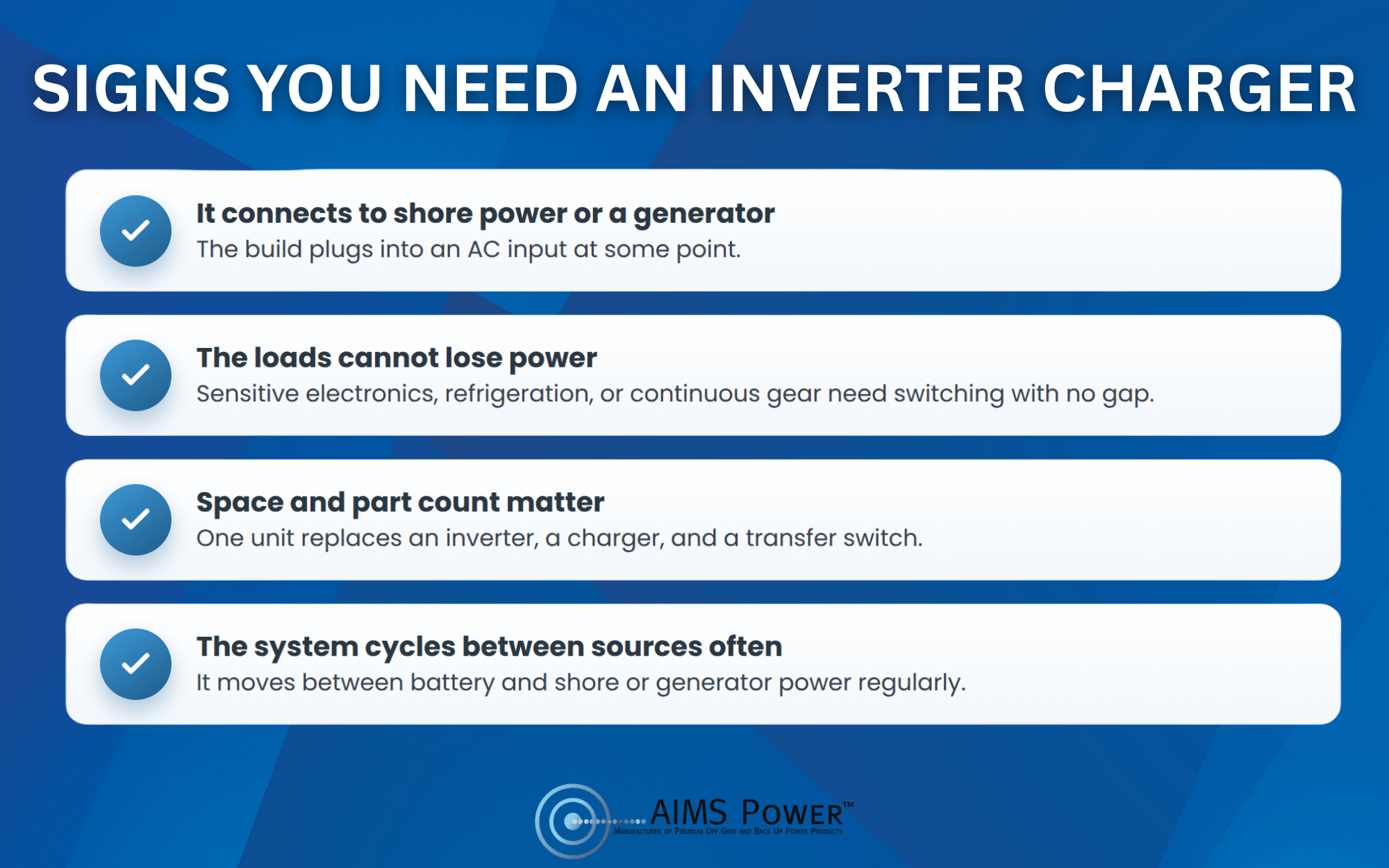
Not every build needs an inverter charger. A standalone inverter is enough when the system only ever runs loads from a battery and charges from a separate source on its own schedule. The combined unit earns its place when the following are true.
- The build connects to shore power or a generator: If the system plugs into an AC input at any point, an inverter charger handles both running loads and recharging the battery from that source, instead of adding a separate charger.
- The loads cannot lose power during the switch: Applications that run sensitive electronics, refrigeration, or continuous equipment need the automatic transfer switch so there is no interruption when the power source changes.
- Space and part count matter: One unit replaces an inverter, a battery charger, and a transfer switch, which cuts down wiring, install time, and points of failure in a commercial build.
- The system cycles between sources often: A vehicle or site that regularly moves between battery power and shore or generator power benefits from automatic switching rather than manual intervention every time.
If a build hits several of these, the inverter charger is usually the better design choice.
Where Inverter Chargers Fit In Commercial Builds
The combined unit shows up across the applications AIMS Power builds for, anywhere a battery bank and an outside AC source share the same system.
Work Trucks and Fleet Vehicles
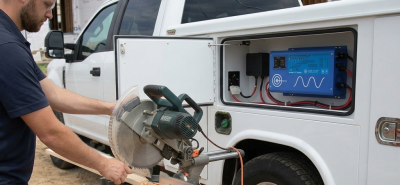
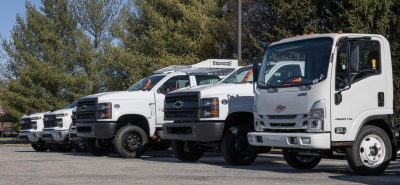
A work truck runs tools and equipment from a house battery during the day, then charges that battery from shore power overnight or from the engine. An inverter charger handles both jobs and switches between them without the crew managing it.
Mobile and Specialty Vehicles
Builds that carry AC appliances and plug into shore power at a depot or site need clean AC on the road and a full battery when they return. The combined unit runs the loads and recharges from the AC input, so the vehicle is ready for the next shift.
Off-Grid and Backup Power
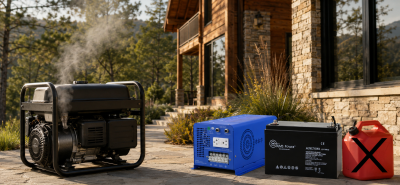
In off-grid power and backup builds, an inverter charger runs critical loads from the battery bank, then recharges from a generator or the grid when it is available. During a power outage, the automatic transfer keeps equipment online with no gap, which is what backup power depends on.
Solar-Equipped Systems
Where a system pairs a battery bank with solar panels and a solar charge controller, an inverter charger adds a second charging path from shore power or a generator, so the battery stays full even when the solar array cannot keep up.
What to Check When Speccing an Inverter Charger
Sizing an inverter charger comes down to matching it to both the load it runs and the battery bank it charges.
- Continuous power rating: The inverter side has to cover the total continuous wattage of everything running at once, with headroom for the surge that motors and compressors pull at startup.
- Battery voltage: The unit has to match the system’s battery voltage, whether that is 12V, 24V, or 48V.
- Charger output: The charger’s amp rating sets how fast the battery bank refills. A larger bank or a faster turnaround calls for a higher charge rate.
- Battery chemistry support: The unit needs charge settings for the battery in use. Lithium batteries and lead acid batteries charge differently, so a unit with selectable profiles and a battery temperature sensor protects the bank.
- Transfer switch rating: The built-in transfer switch has to handle the amp draw of the pass-through AC, so it carries shore power or generator power to the loads safely.
Matching all of these, rather than just the inverter wattage, is what keeps the unit running at full output and the battery healthy over its service life.
Choosing an Inverter Charger with AIMS Power
AIMS Power is a U.S.-based manufacturer with more than 25 years of building power conversion equipment, backed by in-house technical support. AIMS builds pure sine inverter chargers that combine inverting, charging, and automatic transfer in one unit, many ETL certified to UL 458 standards, with selectable battery type settings and support for battery temperature sensors. Alongside them, AIMS builds the batteries, solar panels, and charge controllers that complete a system, so the parts are designed to work together.
For businesses speccing power into a build, that means one source for the equipment and the help to match it to the load and battery bank. If you are designing a commercial system or sourcing at volume, contact AIMS Power to find the right fit or to talk through OEM and reseller options.