What Can a 5000 Watt Inverter Run? Sizing for Heavy Loads
The Short Answer: A 5000 watt inverter provides massive electrical capacity capable of running a combination of heavy-duty home appliances, professional power tools, and large off-grid systems simultaneously. By delivering high continuous output power alongside substantial peak power surge capacity, an inverter can comfortably power an air conditioner, a refrigerator, microwave units, and workshop equipment.
Navigating electrical sizing can quickly become confusing when balancing starting surges against normal running draws. When a system lacks proper capacity, inductive motors stall, circuit protection trips, and sensitive equipment fails.
Selecting a high-performance 5000 watt power inverter eliminates some guesswork by offering enough headroom to manage heavy electrical loads without breaking a sweat. From running an off-grid cabin to maintaining business continuity during an unexpected grid failure, understanding how to size, wire, and operate a heavy-duty watt inverter ensures dependable performance across every application.
Understanding Continuous Power vs. Peak Power
To accurately determine what a 5000 watt inverter can run, facility managers, contractors, and homeowners must understand the crucial distinction between continuous power and surge capacity.
- Continuous Output: This rating represents the exact amount of electrical load the power inverter can sustain indefinitely without overheating or shutting down. A true 5000w inverter provides 5000 watts of steady, reliable AC power hour after hour.
- Peak Power / Surge Capacity: Many electrical devices, especially those featuring electric motors, compressors, or heavy transformers, require a temporary burst of energy to start up. This initial draw can be two to three times higher than the running wattage. A heavy-duty inverter features a high surge rating, allowing it to handle these transient spikes smoothly before settling back down to its standard continuous output power.
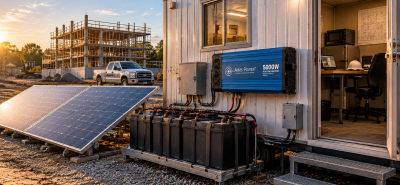
Failing to account for motor startup surges is the single most common cause of inverter shutdowns. Evaluating both the running watts and starting surge of every connected device prevents system faults and protects the broader electrical architecture. To eliminate the guesswork, use our calculator input tool to automatically total your continue baseloads, and peak surge demands, ensuring you select a unit with the exact headroom your site trailer requires.
What a 5000 Watt Inverter Can Run Simultaneously
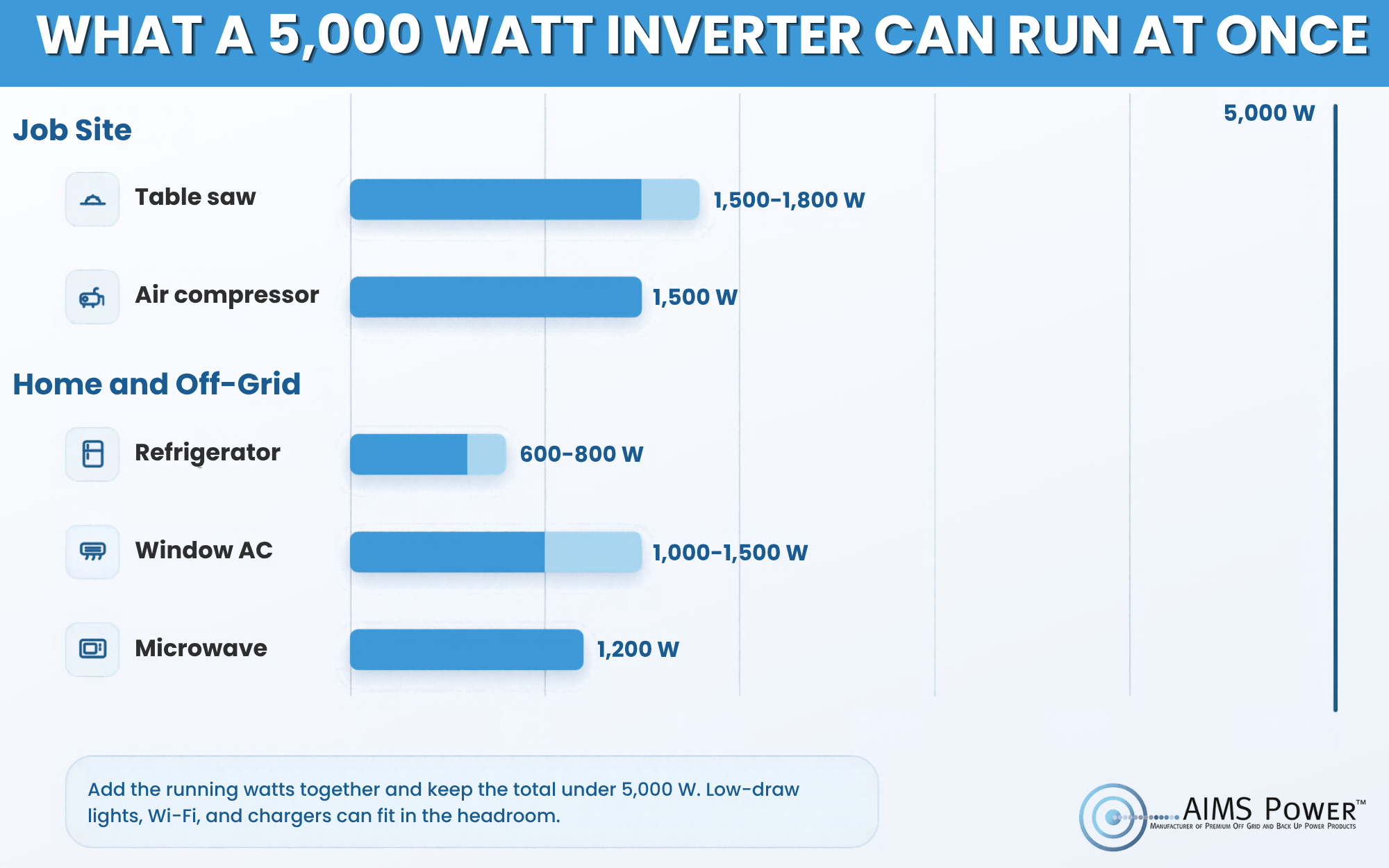
To visualize the sheer capability of a 5000 watt inverter, consider how its capacity translates into real-world equipment usage. Because total power consumption is cumulative, a user can combine multiple moderate loads or run a few heavy-duty appliances at the same time.
Workshop and Construction Applications
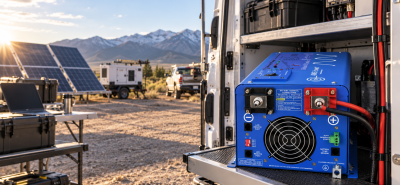
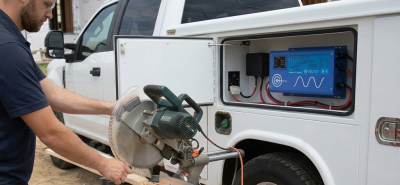
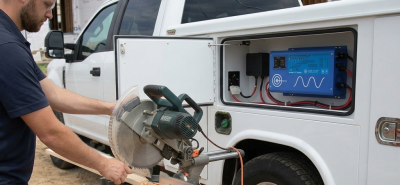
On a remote job site or in a professional mobile workshop, power demands fluctuate constantly. A 5000 watt inverter easily manages simultaneous tool operation:
- A heavy-duty circular saw or table saw drawing 1,500 to 1,800 running watts (with higher startup surges).
- A professional air compressor pulling 1,500 watts of continuous running power.
- Job-site LED lighting, battery charger stations for cordless tools, and a laptop running diagnostics.
Residential and Off-Grid Living Applications
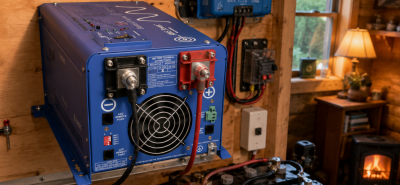
In a residential home or isolated off-grid cabin, managing comfort appliances requires careful load distribution. A 5000 watt inverter handles household necessities with room to spare:
- A full-size household refrigerator requiring 600 to 800 running watts (and a 1,200-watt compressor startup surge).
- A window-unit air conditioner pulling 1,000 to 1,500 watts.
- A microwave oven drawing 1,200 watts.
- Wi-Fi routers, television screens, LED lighting circuits, and phone charging blocks plugged into multiple AC outlets or a dedicated USB port.
By mapping out total electrical draws, users can run essential comfort and productivity appliances without exceeding the inverter’s maximum continuous output.
Pure Sine Wave Inverters vs. Modified Sine Wave
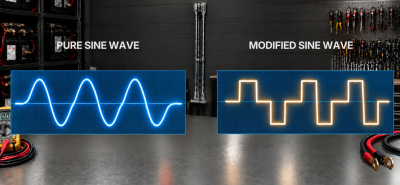
When powering modern electronics, the quality of the AC waveform matters just as much as the total wattage. Lower-quality modified square wave inverters produce choppy electricity that causes audible humming in audio equipment, overheats electric motor windings, and corrupts data on sensitive computing hardware.
Pure Sine Wave Inverters
Deploying a pure sine wave inverter ensures that the electricity leaving the unit mirrors clean municipal utility power. This high-performance output is vital for protecting sensitive electronics, variable-speed appliance motors, medical equipment, and digital control boards. Additionally, a modern unit featuring an easy-to-read digital display or lcd display provides real-time monitoring of battery voltage, output amperage, and operational status, allowing users to track their power consumption at a glance.
Sizing Your Battery Bank and Input Voltage
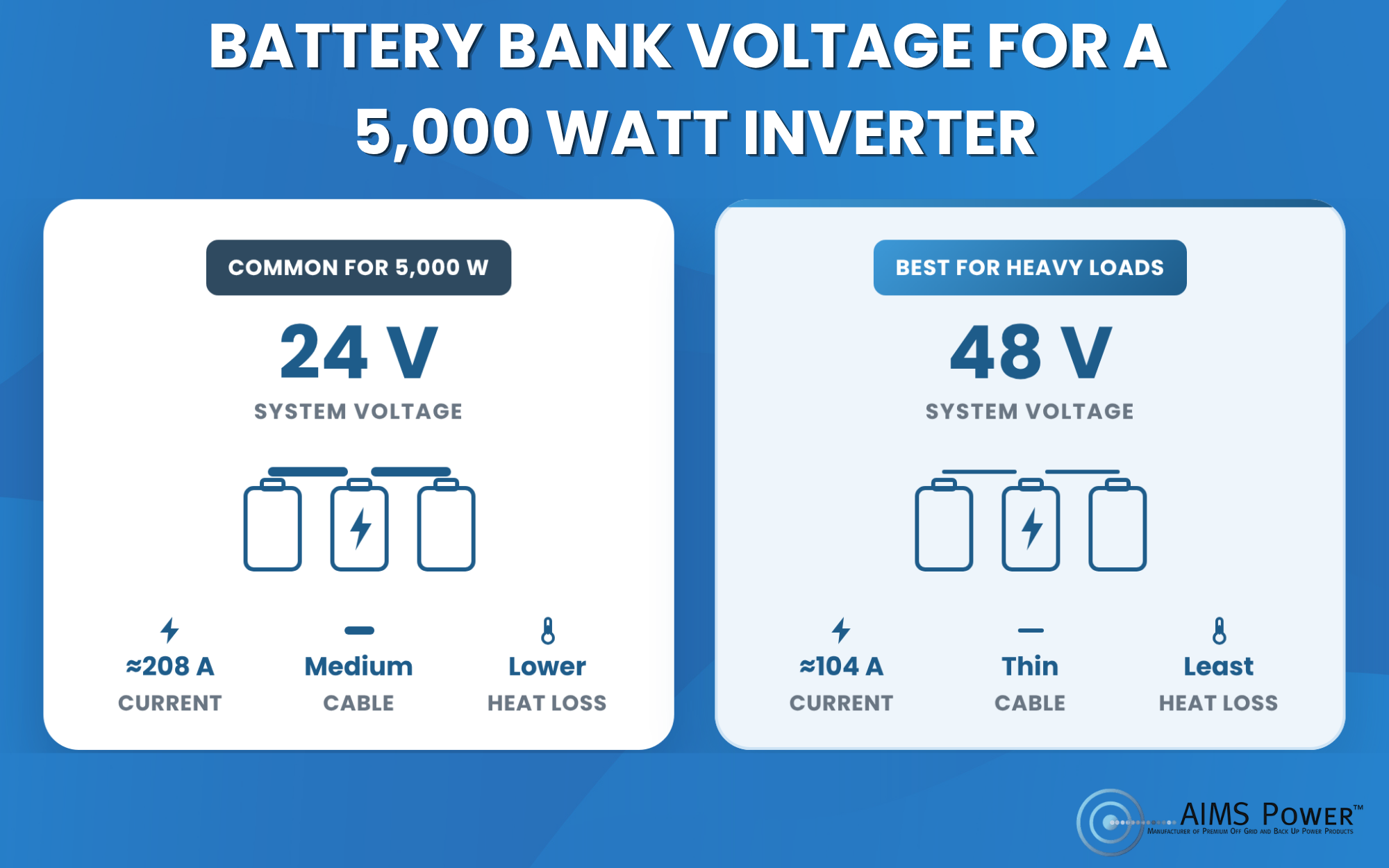
An inverter is only as capable as the energy source feeding it. Drawing 5,000 watts of electricity from a DC power source requires careful attention to system architecture, wiring thickness, and storage capacity.
Battery Voltage and Configuration
Operating a heavy-duty inverter requires a robust DC foundation. While smaller recreational setups run on 12 volt systems, a high-capacity 5000 watt inverter typically operates on a 24 volt or 48 volt configuration. Higher input voltage dramatically reduces the total amperage flowing through the cables, minimizing thermal loss and allowing for safer, more efficient energy transfer from the battery bank.
Choosing the Right Battery Type
Selecting the correct battery type dictates overall system longevity and discharge performance.
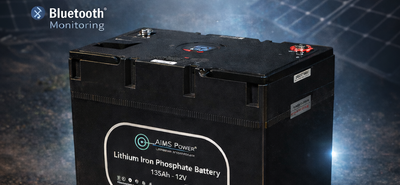
Traditional flooded lead acid battery options are inexpensive upfront, but they require regular watering maintenance and cannot be deeply discharged without shortening their functional lifespan. Today, advanced lithium battery banks offer superior energy density, rapid recharge capabilities, and thousands of deep discharge cycles.
Whether the setup utilizes a standalone off-grid array, a hybrid inverter, or a backup generator system, maintaining a properly balanced battery bank ensures the inverter can deliver its full rated output when heavy loads engage.
Installation, Terminals, and Safety Hardware
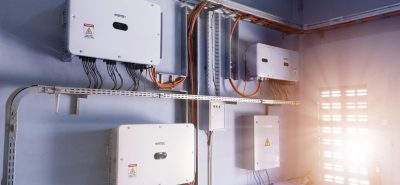
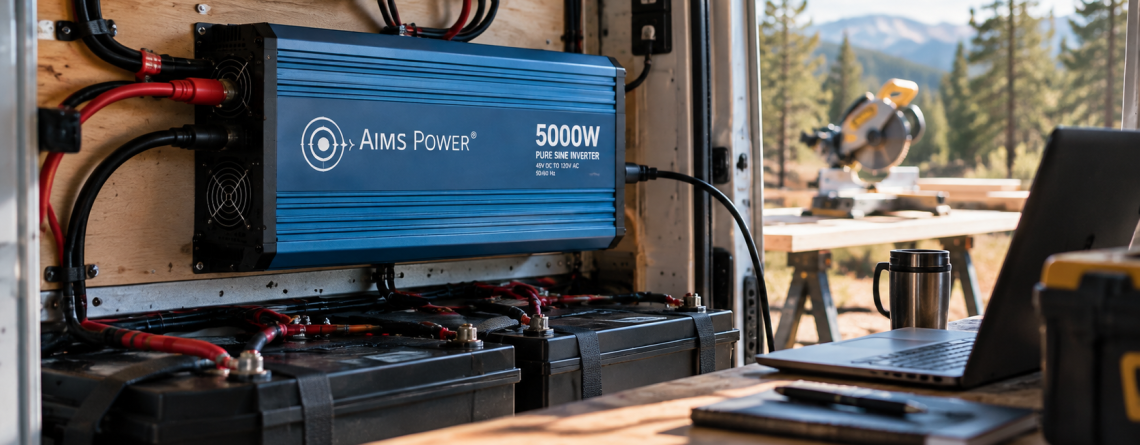
A high-output electrical unit demands professional installation practices to guarantee safety and compliance. Attempting to power a 5,000 watt load through standard plug-in connections is impossible; these systems require direct wiring through a heavy-duty terminal block designed to handle the massive continuous current.
- Cable Sizing and Fusing: Because high-wattage DC draws hundreds of amps, using thick, industrial-grade copper cables is mandatory. Undersized wiring creates severe resistance, voltage drop, and potential fire hazards. Proper circuit breakers and inline fuses must be installed on the DC positive line to protect the inverter and batteries from catastrophic short circuits.
- Split-Phase and Transfer Capabilities: Many advanced commercial and residential setups utilize a split-phase configuration or integrate an automatic transfer switch. This allows the system to transition instantly between utility power, solar inversion, and a backup generator without dropping connected loads.
A reliable power setup starts with a strict adherence to electrical codes. Whether you are wiring a work truck, boat, or off grid home, cutting corners on the installation guarantees system faults down the line.
Equipping Your Power System with AIMS Power
AIMS Power is a trusted United States-based manufacturer with more than 25 years of experience engineering advanced power conversion equipment and renewable energy solutions. We provide the heavy-duty hardware required to build dependable high-wattage power setups for contractors, homeowners, and commercial operators. From industrial-grade power inverters and multi-stage battery chargers to complete solar integration kits, we manufacture reliable equipment built to withstand demanding operational environments.
Our in-house technical support team collaborates directly with system builders and project managers to configure custom power systems tailored to your exact operational scope. Whether you need to run a remote mobile workshop or secure backup energy for your entire household, AIMS Power delivers a complete solution designed for maximum durability and efficiency.
To upgrade your electrical resilience and review equipment options for your project, browse the full line of AIMS Power solutions to find the exact match for your high-wattage power requirements.